 Contact Us
 Appointment

Book An Appointment
Get in touch with our jewellery experts for virtual consultation
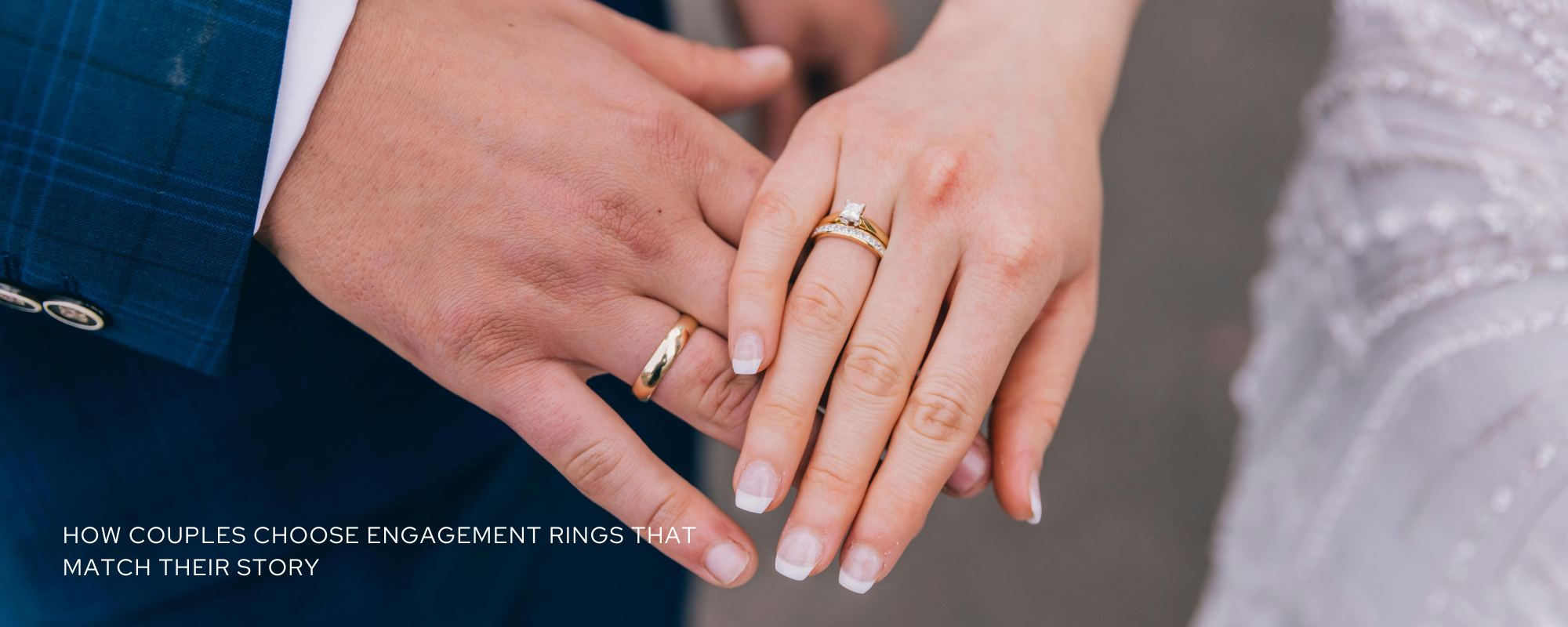
How Couples Choose Engagement Rings That Match Their Story


.webp)
.webp)
 .webp)


 Share on Facebook
 Share on LinkedIn
 Share on WhatsApp
Finding the right engagement rings for couples in India is tough. Between rising wedding budgets, endless design options, and the growing conversation around lab-grown diamond engagement rings, couples struggle to separate marketing noise from practical guidance. This guide helps you make a clear, informed decision by focusing on what truly matters.
Instead of chasing diamond jewellery trends, you’ll learn how to evaluate value, certification, durability, and long-term comfort. So, your ring reflects your story, not just a showroom display.
What “Engagement Rings for Couples” Really Means Today
When people search for engagement rings, they usually mean one of three things:
Matching rings for both partners
Coordinated designs with a shared theme
A ring selected together rather than secretly
In India, engagement jewellery traditions vary across regions. Some families prefer gold bands. Others prefer diamond solitaires. Urban couples increasingly prefer rings that reflect their lifestyle rather than only tradition.

Modern couples chooses rings types for engagement that focus on:
Everyday wear comfort, so they can wear it wherever they want.
Durable metal choices from 10kt yellow gold, 14kt rose gold, and 18kt white gold.
Certified diamonds with GIA, IGI, and SGL authentication certification reports.
Budget efficiency that promises quality without overspending.
Minimal yet elegant designs to reflect emotions on the fingers.
Now, in India, the emphasis for wearing a couple ring has shifted from showmanship to thoughtful selection.
So, where to start? Here’s the complete roadmap.
First, Start With Meaning Before Design.
Before browsing styles on jewellery websites, visiting the local showrooms, or considering any possible options, couples should clarify what the ring represents for them. It is important.
Define Your Relationship Style
Ask practical questions:
Do you prefer minimal or bold jewellery?
Do you wear jewellery daily or occasionally?
Do you work in corporate or active environments?
Do you like traditional yellow gold or modern white metals?
Getting the answers sufficiently helps to get a relevant design. Also, lifestyle matters here.
For example, a 2-carat ring with a large and high-set stone may look impressive. But it might not suit daily office wear. There, a sleek solitaire with secure prongs may offer better long-term comfort.
Decide on Matching or Individual Designs
Every couple has its own choice for engagement rings. Some want identical rings. Others prefer rings that complement each other without being the same.
The options include the following:
Matching bands with a similar metal finish, like 14kt white gold with engraving.
Same diamond shape in different settings, such as a round brilliant shape in a bezel set.
A solitaire for one partner and a simple band for the other tells the never-ending love story.
Coordinated engraving inside the band with a precious name, first meeting date, etc.
Ultimately, matching rings is more about emotional connection than identical appearance.
Understanding Diamond Options Before You Buy
The reality of buying a diamond engagement ring in India is that you have multiple choices. You can prefer natural diamonds, lab-grown, CZ, or Moissanite, too. But what we are trying to say is that if you want only diamonds, there are only two types of diamonds: natural and lab-grown diamonds.
Most Indian couples are now looking for two elements in diamonds: quality and affordability. In natural diamonds, they get only quality; affordability is not. While in the lab-made diamonds, they get both.
Lab-Grown Diamond Ring Overview
The engagement ring made with these eco-friendly diamonds, couples can get the same chemical and physical characteristics as natural stone.
The difference is only their origin.

Here are the key differences Indian buyers consider:
Price: Lab-grown diamonds typically cost 30–50% less than mined diamonds of similar grade and quality.
Availability of larger sizes: Within the same budget (e.g., 20k to 60k Indian rupees), couples can choose a higher carat weight.
Ethical sourcing: Many buyers prefer traceable origins. Lab diamonds are usually traced through their indoor production.
Certification: Reputed lab-grown diamonds come with IGI certification, as well as natural diamonds.
For couples planning a wedding, home setup, or other financial commitments, budget efficiency matters. Lab-made diamonds offer flexibility without compromising authenticity.
The hot question: Why Lab-Grown Diamonds Are Growing in India
In metro cities like Mumbai, Delhi, Bengaluru, and Ahmedabad, awareness around lab-grown diamonds has increased significantly. Buyers appreciate these aspects:
Transparency in pricing is fair enough.
Competitive 4Cs grading to experience luxury and quality.
Sustainable sourcing appeals to future generations.
Access to modern designs from solitaire to toi et moi.
The fact is that this shift is structural, not seasonal. That makes lab-grown engagement rings a long-term category, not a passing trend.
The 4Cs of Diamond Explained for Couples
The quality of every diamond has been decided from the 4Cs grades. Understanding them helps avoid overpaying.

Cut – The Most Important Factor
Diamond cut grade determines brilliance and tells how much the light will reflect from every angle. Even a high-carat diamond can appear dull if poorly cut.
When choosing a diamond for an engagement ring, follow these tips:
Prioritise Excellent or Very Good cut grade. Avoid Fair and Poor cut grade diamonds.
Focus on sparkle over size. Even a 1-carat diamond looks good on the finger instead of a 3-carat diamond.
View the stone under natural and indoor light. Jewellers now offer this facility in Showrooms or on websites, too, through high-quality engagement ring images and videos.
In essence, diamond cut directly affects visual impact.
Carat vs Visual Size
Diamond carat refers to weight, not physical diameter. From 0.05 to 10-carat or even bigger diamond carats are available to choose from. This aspect also affects the pricing.
The fact is, two diamonds with the same carat can appear different depending on:
Cut proportions like Excellent cut grade are higher in price than Good grade.
Diamond shape. Round diamonds are usually more affordable than fancy shape diamonds like oval or pear.
Setting design. From solitaire styles to three-stone unique engagement rings, you have a choice to opt for.
Lab-grown diamonds allow couples to increase carat size within the same budget, which is a practical advantage in the Indian market.
Clarity and Color – Practical Approach
Many buyers overspend on clarity grades that are not visible to the naked eye. Consider this aspect.
For daily wear rings, prefer the following:
VS1 to VS2 clarity offers a good balance in rings. For a more authentic clarity grade, IF to VVS2 clarity diamonds are a prominent choice.
Color grades in the near-colorless range provide value. However, you have to prepare to pay additional for high quality.
Avoid paying a premium for microscopic perfection.
Smart allocation here means investing more in cut rather than extreme clarity.
Engagement Ring Styles That Stay Relevant
Instead of chasing yearly trends to choose engagement rings, focus on styles that remain elegant. Here are the options to consider.
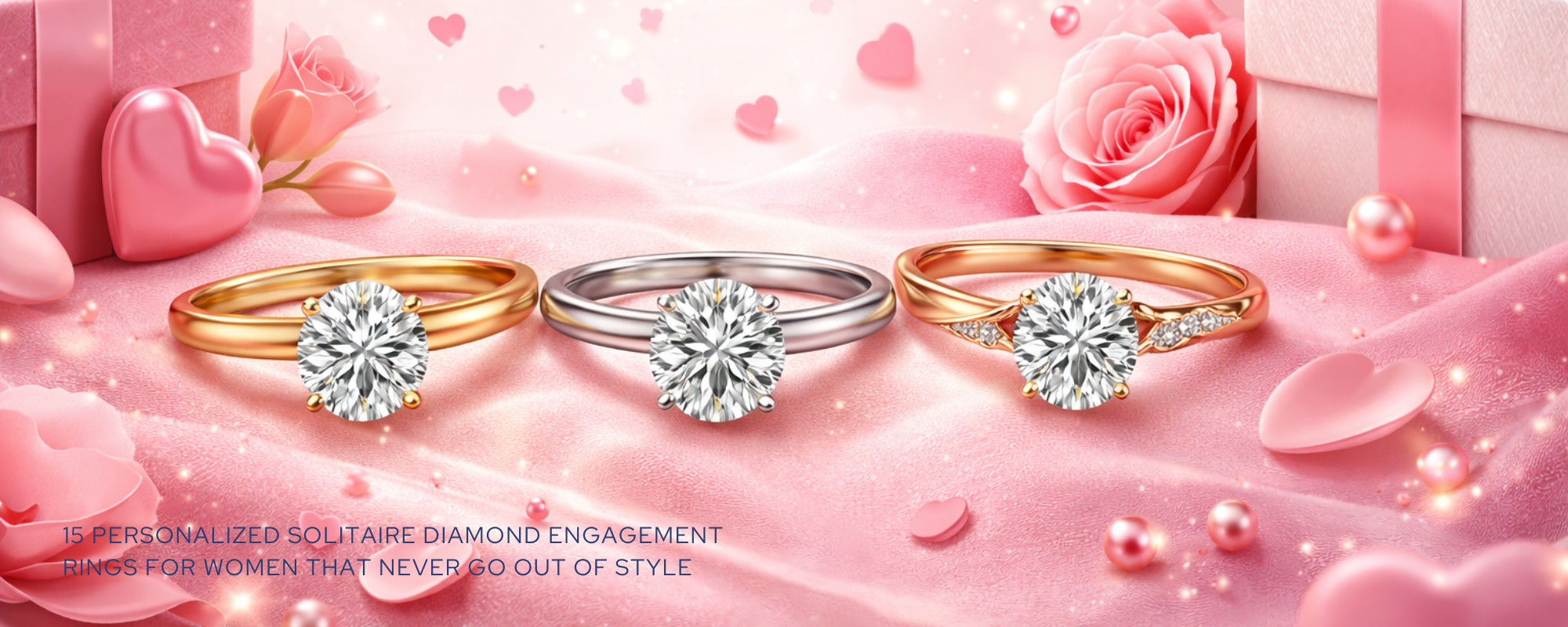
Solitaire Engagement Ring
First, the solitaire engagement ring is the most searched style in India. Usually, this ring style is wearable for every occasion.

Why couples prefer it:
Timeless appearance on the finger is guaranteed for solitaire designs.
Highlights diamond quality because only a main big carat weight diamond exists.
Suitable for formal and casual wear in everyday light and at night.
Easy to maintain and clean at home without affecting the quality.
Round brilliant solitaire diamonds remain dominant in solitaire rings, but oval and pear shapes are increasingly popular.
Halo Engagement Ring
A halo engagement ring surrounds the centre diamond with smaller accent stones. In the North and Western states of India, this ring design has been chosen for a promise of a better future. That’s what modern couples call it: a “promise ring.”

Advantages of choosing a halo-designed ring:
Enhances perceived size due to accent diamonds on the main stone.
Adds extra brilliance with the premium clarity grades.
Suitable for statement preferences like wedding promises and anniversary celebrations.
However, ensure the prong setting in rings offers security and long-term maintenance feasibility.
Minimal and Contemporary Designs
Today’s Gen Z and Millennials couples prioritize modern designs that give them every ring style look under a single frame. That’s called minimal and contemporary designs.

Here is the overview of what they are opting for:
Thin bands with clean lines that uniquely reflect emotions.
Bezel settings for secure hold of the precious lab-grown diamonds.
Gender-neutral styles present feelings about a love relationship, for example, bridal set rings.
Low-profile designs, such as three-stone or five-stone, for comfort are guaranteed.
In essence, contemporary engagement ring styles in India show consistent demand for practical elegance.
Metal Choices for Long-Term Comfort in Rings
The engagement ring design you finalize, and then it comes to the metal choice. Look, you have five primary choices: 1. Yellow Gold, 2. White Gold. 3. Rose Gold, 4. Platinum and 5. Silver. When selecting metal, consider durability, maintenance, and skin tone.

Yellow Gold
Loves gold’s natural tone like shining yellow? Here are the reasons why it’s a good option:
Traditional choice in India, where families always prefer to have the original tone in the gold.
Complements warm skin tones and matches the personality.
Available in 10K, 14K, and 18K quality variations, where the original gold quantity may vary.
White Gold
When having a budget issue but needing the same look as platinum metal, white gold is the right choice. Its precious appearance makes it a premium selection.
A modern look can be experienced with the alloy of nickel.
Enhances diamond brilliance when the stone is not in the fancy colors, such as yellow, pink, blue, etc.
Requires occasional rhodium plating to enhance and maintain the overall ring’s appearance.
Rose Gold
For a more romantic appeal in the jewellery, rose gold has been chosen due to its pinkish metal tone. There are other reasons to get it:
Subtle and distinctive. Yellow and white gold are common, but rose gold is truly unique to have.
Complements pastel wardrobes, especially Indian attire like Saree and Kurti.
Popular among younger buyers, as Gen Z never compromises to present their feelings publicly.
Platinum
This metal has been opted for to experience what true luxury is.
Highly durable characteristics make it more preferable for any occasional jewellery.
Naturally white metal, there are no additional metals added for color.
Slightly heavier feel compared to rose and yellow gold due to its unique weight.
Higher initial cost, yet platinum is considered for the premium bespoke jewellery.
Metal choice affects both aesthetics and long-term maintenance.
Silver
Apart from white gold and platinum options, Silver metal is a common choice for Indian jewellery buyers. Here is why it looks good.
More affordable than any other metals. So, even with a smaller budget, the quality look is available.
From 925 to 935, sterling silver variations keep choices open for getting more pure silver.
Suitable for every engagement ring designs like five-stone rings, to wedding bands also.
Proper Engagement Ring Budget Planning in India
Searching for an engagement ring in budget often reflects real financial planning concerns.
Instead of following outdated rules about spending two or three months’ salary, couples today are making wise decisions:
Set a clear overall wedding budget, like 5 to 8 lakh rupees.
Allocated rings cost realistically around 10-15% of the total wedding budget.
Compare natural vs lab-grown diamond pricing, and most of them choose a certified lab-grown diamond ring.
Prioritise value over brand markup. They now prefer a jewellery brand where they get both quality and pay within budget.
For example:
A 1-carat natural diamond may exceed the budget significantly.
A 1-carat lab-grown diamond engagement ring may be more accessible.
That flexibility matters for financially conscious couples. You can even consider these aspects when going to buy rings.
Practical Engagement Ring Buying Tips to Follow
Before finalising your purchase, review this checklist. As it works in your favor.
Ring Size Accuracy
First, you have to check whether the ring size you’re choosing is correct or not.
Measuring professionally, other online tools replace traditional measuring practices.
Consider seasonal finger size changes, as in winter the fingers swell and in summer it sinks. Consider this fact.
Confirm resizing policy. Check how the jewellery brand allows resizing in the ring, if an issue occurs.
Certification Verification
Then, prioritize the certifications available for the lab-grown diamond jewellery.
Look for IGI, GIA, or SGL certification for lab-grown diamonds, as it authenticates the quality you want.
Match the certificate number with the stone. Visit the website of the certification authority and see if it's the same diamond your ring has.
Setting Durability
Third is the ring setting toughness check.
Check the prong thickness. Is it too hard or too thin? If it does not match the prototype, then tell immediately about the jewellery.
Avoid overly thin bands for daily wear. These bands are prominent for occasional wear. Prefer a mid-sized band.
Inspect finishing quality as the ring is ready and ask the jeweller to share an image and video.
Return and Exchange Policy
Finally, you have to check the return and exchange policy in the jewellery store.
Review timelines and read how much time the return window is open for the return.
Confirm resizing or exchange options, as most of the online and local brands offer this option.
Understand warranty details and insurance because it covers any issues to be resolved.
These steps prevent common engagement ring buying mistakes.
Explore Lab-Grown Diamond Engagement Rings at Pure Jewels
If you are looking to buy lab-grown diamond engagement rings from Pure Jewels, it’s a good choice. At Pure Jewels, we focus on
Certified lab-grown diamonds
Clear 4Cs disclosure
Secure settings
Everyday wear suitability
We offer lab-grown diamond engagement rings designed for modern Indian couples who value both elegance and practicality.
You can do the following, and we are happy to answer you:
Compare solitaire and halo options
Check the carat weight range
Review certification details
Evaluate metal options
Buying online requires transparency. Clear product specifications and certification details are essential, and at Pure Jewels, we’re delighted to provide them to you.
If you need a customized engagement ring, then we’re also happy to experience the moment you want with a love partner.
Final Thoughts
Choosing an engagement ring is not about following trends or meeting external expectations. It is about selecting a piece that aligns with your lifestyle, budget, and shared values.
For couples exploring engagement rings in India, clarity comes from understanding:
Diamond fundamentals
Budget planning
Practical wear considerations
Lab-grown vs natural options
A thoughtfully selected ring becomes part of daily life, not just a ceremonial symbol.
If you are considering a lab-grown diamond ring, focus on certified quality, secure settings, and timeless design. The right choice reflects your story, proposal, that remains for the years ahead.
FAQs
My Fiancee is from Mumbai, and I’m from Chennai. What ring style should we choose?
The solitaire and halo is a prime choice with 1-carat diamonds and 14kt gold. But it depends on what your love partner needs. If she loves modern looks, then the customized ring option is a good one.
Are lab-grown diamonds real diamonds?
Yes. Lab-grown diamonds have the same chemical and physical properties as natural diamonds and are graded on the same 4Cs scale.
What carat size is ideal for Indian buyers?
There is no fixed rule. Many couples prefer a 0.75 to 1.5 carat range, depending on budget. Lab-grown diamonds make larger sizes more accessible.
Is platinum better than gold for engagement rings?
Platinum is more durable and naturally white, while gold offers more color options (rose, yellow, and white) and a lower initial cost. If you have a budget to spend, platinum rings are an ideal choice.
Can couples design engagement rings together?
Yes. Many couples now select rings jointly to reflect personal taste and ensure comfort. You can ask jewellers to make a ring usually comfortable, premium looking for your couple ring within your budget.

Contact Us
3rd Floor, Building E-2, F.P.108/P, Naginawadi Road, Opp. RJD Business HUB, Katargam, Surat - 395004.India


Limited Edition Gift with Purchase
A sparkling deal only while supplies last.
Spend ₹1,00,000 or more
and select one of these complimentary gifts
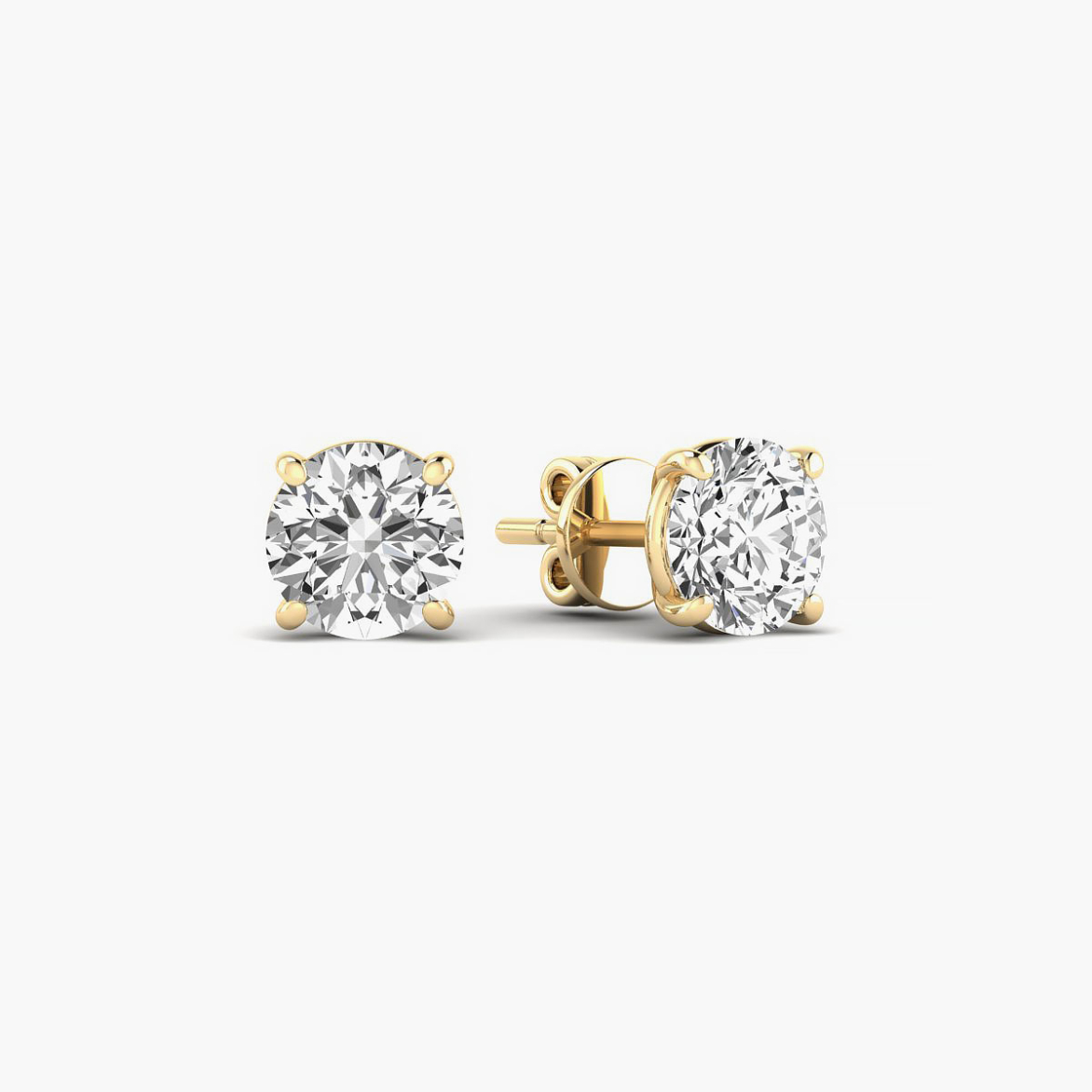
Lab Grown Diamond Stud Earring
14KT White Gold - Gift With Purchase