 Contact Us
 Appointment

Book An Appointment
Get in touch with our jewellery experts for virtual consultation
Prongs Setting in Rings: What Makes Your Jewellery More Durable


.webp)
.webp)
 .webp)


 Share on Facebook
 Share on LinkedIn
 Share on WhatsApp
When someone chooses a diamond ring, they usually focus on the sparkle. Very few pause to ask what actually holds that sparkle in place. The strength of your jewellery does not come from the diamond alone; it comes from the exquisite craftsmanship around it. That exquisite craftsmanship is called the prong setting ring design.
If you are searching for a lab-grown diamond engagement ring in India, understanding ring prongs is not optional. It directly impacts durability, daily wear safety, long-term maintenance, and even how brilliant your diamond looks under natural light.
This guide explains what the prong setting is and why it is required for every type of ring. In short, you can choose confidently and protect your investment.
What Is a Prong Setting Ring and Why It Dominates Modern Engagement Designs
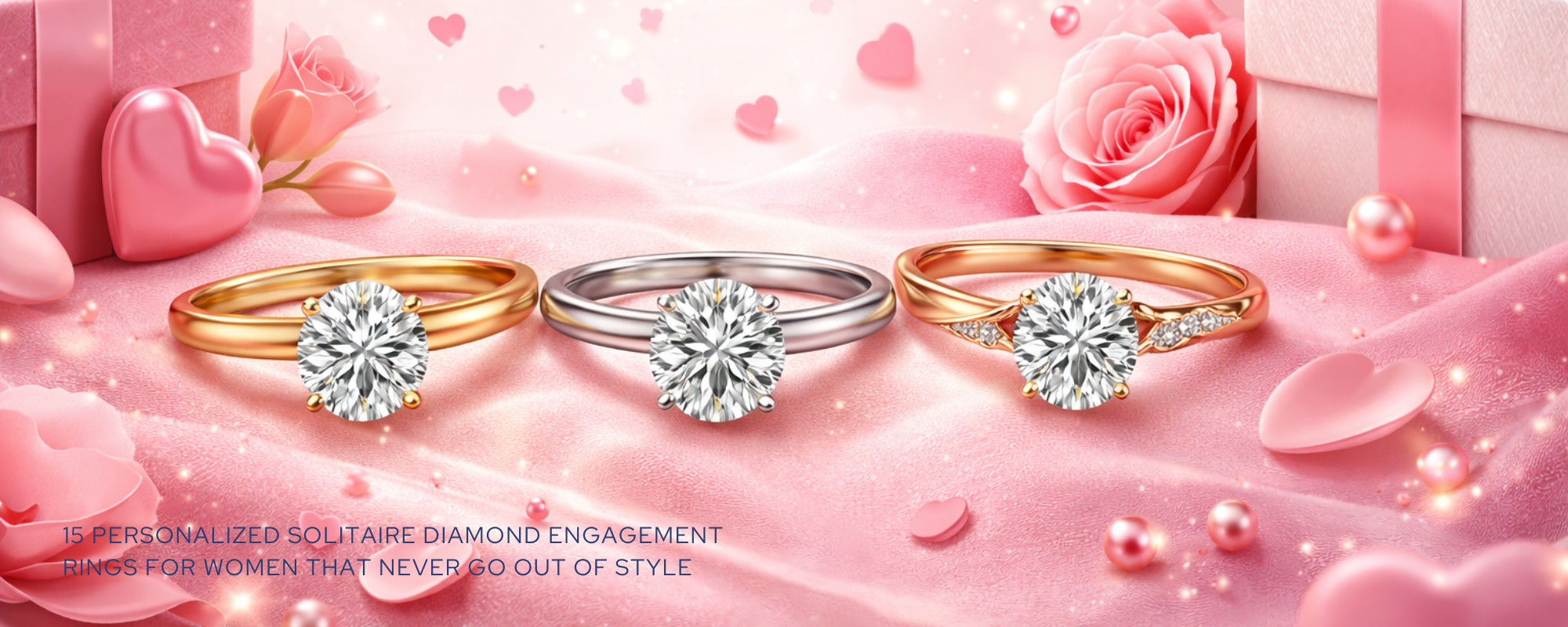
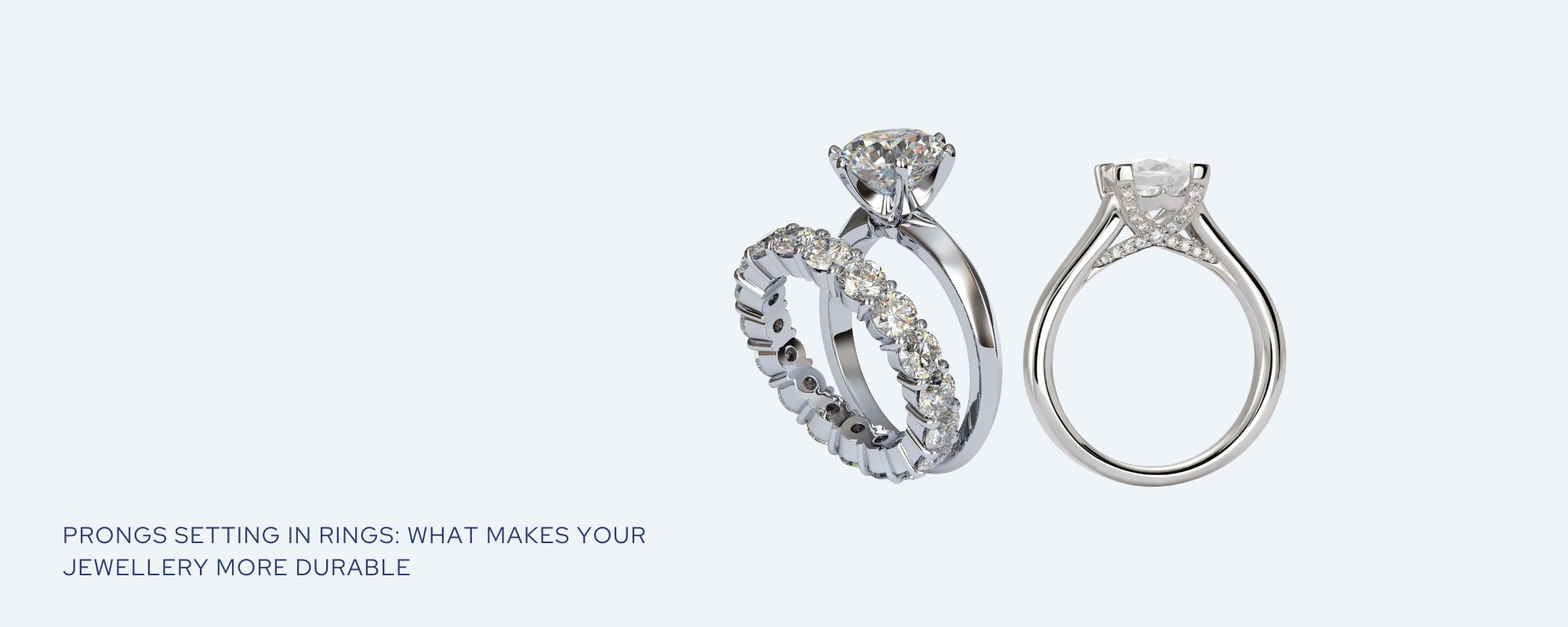
A prong setting ring is a type of design where small metal claws grip the diamond and hold it securely above the band. These claws are known as ring prongs.
So, what about the bezel setting? It surrounds the diamond completely.
While prongs leave the stone open from multiple sides. That openness allows more light to pass through the diamond, enhancing brilliance.
In India, where lab-grown diamond engagement rings are increasingly shifting toward solitaires and customized styles, prong settings have become the preferred choice because they offer:
Maximum sparkle from every angle a wearer can experience.
Elegant elevation of the personality is guaranteed with the prongs.
Flexible design customisation available from claw prongs to longer ones.
Better visual size and appearance of the stone can be felt when wearing the ring on the finger.
But durability depends on how those prongs are designed. It doesn’t matter just how many there are.
What Are Ring Prongs?
Prongs for rings are small extensions of metal that rise from the band and curve over the diamond’s girdle (outer edge). Their job is simple but important: hold the stone firmly without covering too much surface area.
A well-crafted prong setting balances three elements:
Grip strength
Symmetry
Light exposure
If any one of these fails, either loses sparkle or becomes unsafe to wear the ring on the finger.
The question is: How do ring setting prongs affect sparkle and stone stability?
Look, a diamond reflects light from the bottom and sides. When ring setting prongs are positioned correctly, the light enters freely, and the stone appears brighter with a larger appearance.
However, if prongs are too thin or poorly aligned, they weaken over time. The durability of a prong setting ring depends on:
Proper seat cutting (the groove where the diamond sits)
Equal pressure distribution across prongs
Metal thickness is proportionate to carat weight.
Modern jewellery manufacturing now uses CAD precision and laser soldering to improve prong accuracy. This significantly reduces stone movement and long-term loosening.
Types of Prong Settings for Rings: Security, Style, and Stone Shape Compatibility
There are different types of prong settings available to choose from, engagement rings, wedding rings, or even matching couple bands. Which prong suits the ring is based on diamond size (like a 1-carat round brilliant cut or a 2.5-carat emerald shape), and the wearing preference.
3, 4, and 6 Prong Setting Engagement Ring
When talking about the 3 prongs in the ring, it refers to the triangle side grip that holds the diamond firmly. Also, some couples prefer it for presenting the past, present, and future of their love life. For halo design and three-stone rings, these prongs are commonly used.

The four-prong setting delivers a classic solitaire appearance. So, even in personalized solitaire engagement rings, these prongs can be the right choice as it allows more light exposure and are ideal for diamonds under 1.5 carats.
Need a fancier look and additional security for your love ring? Try to get six prongs. These types of prongs offer better weight distribution and are optimized for increased safety if one prong weakens. When you have 3-5 carats of lab-grown diamonds, six prongs are generally more secure for Indian buyers who wear their rings daily.
Claw Prongs vs Rounded Prongs: Latest Design Preferences
Claw prongs are sharp and pointed. They create a refined, high-end appearance seen in luxury solitaire rings. Even if you need them in an eternity wedding band, you could pick one for a more secure grip.

Rounded prongs are softer in look and feel, making them practical for daily wear. In flower-studded designs and halo rings with elongated shaped diamonds like emerald, radiant, and cushion, these prongs are usually found.
One thing to note: Claw prongs require precise finishing. If crafted poorly, they may snag on clothing. When done correctly, they provide excellent grip and minimal visual coverage. Check when you get the ring from the jeweller.
3. V-Prongs, Double Prongs, and Reinforced Structures
Certain diamond shapes demand specialised prongs and do not work the same for every design. Pick the relevant one as per your preference.

V-prongs protect the sharp corners of princess and marquise cuts.
Double prongs add support for stones above 2 carat rings. Whether you opted for an engagement, wedding, or just a surprise proposal, get it.
Hidden gallery rails provide additional structural reinforcement beneath elevated stones. It is required and appropriate to have fancy and secure jewellery.
These details are often overlooked in low-quality rings, but they significantly impact longevity.
How a Ring with Prongs Improves Durability in Modern Jewellery Standards
Many of us assume prongs are delicate. In reality, a properly crafted ring with prongs can last decades, as we Indians follow the cultural tradition of family heirlooms.
Prongs' durability depends on metal choice and structural precision.
Metal Strength: 14K vs 18K Gold vs Platinum
Loves white gold or yellow gold, even platinum and rose gold tones, the prongs have to be chosen properly with the metal.

10K Gold: This is the most common metal choice for a matching band, especially for Gen Z, who celebrate love in their own way. This metal is not as easy to scratch as 41.67% of pure gold.
14K gold: This gold is harder, with 58.33% of pure gold, and is more scratch-resistant. Suitable for active lifestyles.
18K gold: This gold is famous for its rich color, slightly softer, ideal for occasional wear, like in a wedding ring and bangles.
Platinum: This metal is dense and durable. Prongs bend instead of breaking, offering long-term security.
In India, BIS hallmark certification confirms metal purity. Always verify this when choosing a prong setting ring.
Engineering Precision: CAD and Laser Setting
Modern jewellers now use computer-designed prong alignment, laser welding for stronger joints, and symmetry testing before polishing. These upgrades reduce weak points at the base of prongs where the most common failure area.
After all, when you’re spending 20,000 to 70,000 Indian Rupees on the engagement ring, the top-notch quality you deserve from the initial design phase.
Prong Thickness and Carat Ratio
There’s a magical combination that works when choosing the prongs in a ring: 1. Thickness and 2. Diamond carat weight. For example, a 2-carat oval diamond should never sit in thin prongs designed for 1 carat. Proportional craftsmanship ensures balanced tension in the settings that reduce bending risk and offer longer maintenance intervals.
Prong Setting vs Other Ring Settings: Which Offers Better Protection?
You might be very curious why bezel setting has to be avoided when it comes to 4 claw prong selection in the ring. Let’s understand it.
Prong Setting vs Bezel Setting
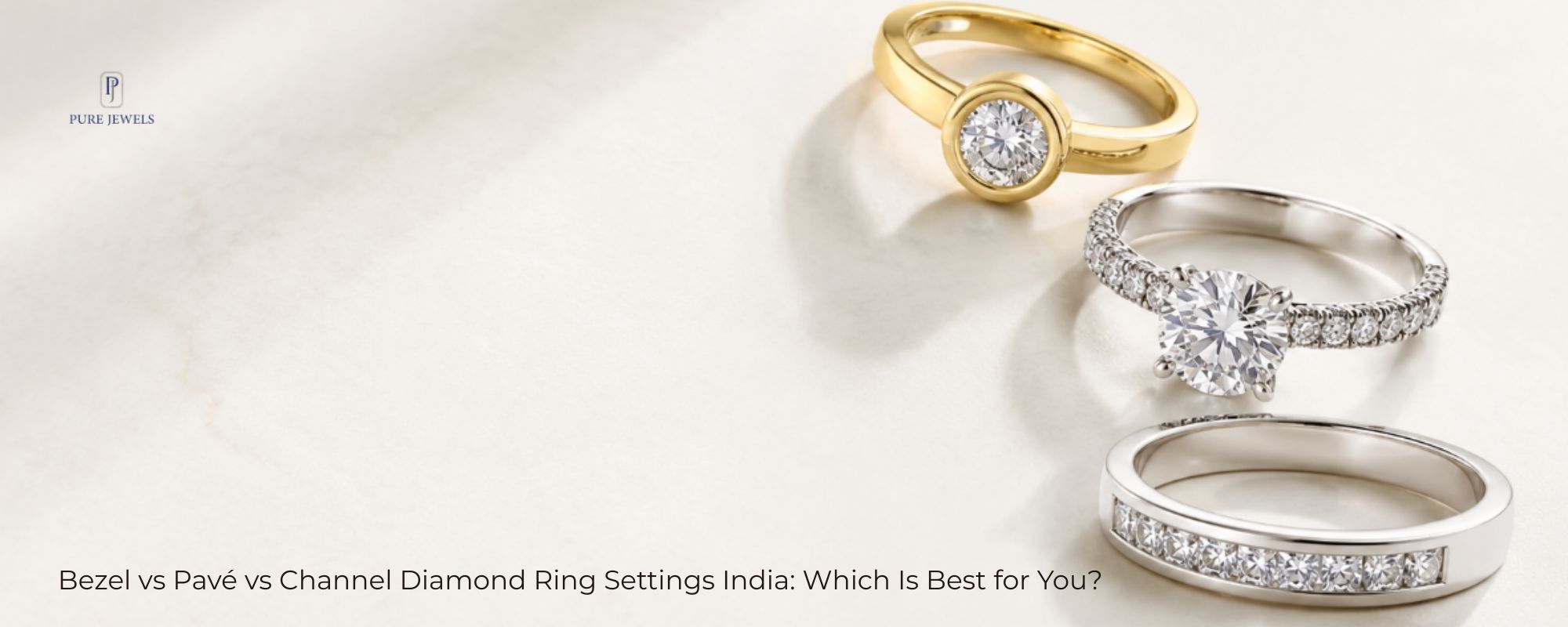
In a bezel setting, the diamond is surrounded completely, and the backside of the stone isn't able to reflect the brilliance. There’s no doubt they offer more security coverage.
We can say that prong settings maximize sparkle, allow easier cleaning, and make diamonds appear larger, even with 0.80 carats.
At the same time, bezel settings provide higher impact protection and offer a modern, minimal look on the finger.
For engagement rings where brilliance matters most, prong settings remain dominant.
Prong Setting vs Halo and Cathedral Designs
Halo rings add surrounding diamonds, increasing surface area and looking premium, even with the 14kt gold. Cathedral settings elevate the centre stone with arches, and for a unique appearance, you can get it.
When using these styles, additional support is required and necessary to maintain durability. Without it, elevated prongs may weaken faster.
Prong Setting Engagement Ring: Ideal for Lab-Grown Diamonds
Lab-grown diamonds have the same hardness (10 on the Mohs scale) as natural diamonds. Structurally, they require identical prong settings.
However, because these diamonds are more affordable, buyers can choose larger stones. Note that larger stones require stronger prongs, like six-claw prongs.

The question is: Why do lab-grown diamonds pair well with prong settings?
The answer is simple because they offer precision cutting, which improves symmetry and clean edges allow secure seating. Also, the budget advantage allows choosing customized prong structures for added safety.
When selecting a prong setting engagement ring, always consider carat weight first, then prong count.
Choosing the Right Prongs for Lab-Grown Rings
For Indian buyers at Pure Jewels, we recommend 4 prongs when the diamond is under 1 carat weight. For 1-2 carat six prongs are sufficient, and above 2 carats, double prongs or added gallery rails are advisable.
Metal choice, such as gold, silver, and platinum, also affects maintenance frequency.
Common Problems with Ring Prongs and How to Prevent Stone Loss
After 3 to 6 months, buyers usually face issues with ring prongs, and they might refuse to wear it. But with the proper care, it can be reduced.
The fact is that even strong prongs can weaken over time.
Signs Your Ring Prongs Need Attention
When your diamond shifts slightly when touched, it requires proper care. Otherwise, it damages the 4Cs grades. Also, if the prongs appear thinner or uneven, like bend then take them to the jeweller. Fabric snags frequently show on the prongs and are handed over to the care expert. These are early warning signs.
How Often Should You Check Prongs for Rings?
In Indian climate conditions, where humidity, sweat, and pollution, annual inspection is advisable.
Professional jewellers may recommend prong tightening once every 1–2 years. Retipping (adding metal to worn prongs) every 5–10 years, depending on wear and regular cleaning, also prevents the accumulation of dirt that weakens the prong grip.
How to Choose the Best Setting Prong for Your Lifestyle
There is only one fact that determines how you live and what your personality decides, a four-prong look right or six prong is a perfect choice.
If you use your hands frequently, work in active environments, and exercise regularly, choose the 6-prong structure for its efficiency and grip overall ring. Choose a slightly lower stone elevation than you want to experience, and for metal, platinum, or 14K gold is a good choice. You can prefer 18K gold for a purer gold amount in the ring.
Consider the climate impact in India. Heat and humidity do not damage diamonds, but can affect metal over time. Regular inspection helps maintain long-term safety.
Pure Jewels Lab-Grown Diamond Rings with Secure Prong Settings
At Pure Jewels, prong setting rings are made with precision and exquisite craftsmanship over mass-produced shortcuts.
Each lab-grown diamond ring features the following benchmarks that specify the ring is truly yours:
Symmetrical prong alignment
BIS-hallmarked gold or platinum
Secure seat cutting for balanced pressure
Customisable 4 or 6 prong options
Authenticated certification reports
For buyers choosing larger lab-grown solitaires, halo, or five-stones, prong bases and optional double prongs are available.
The focus is simple: brilliance without compromising safety.
Conclusion: Strength Hidden in the Smallest Detail
A diamond may capture attention, but prongs protect that brilliance every single day.
Choosing the right prong setting ring is about structural integrity, metal strength, proportional engineering, and long-term maintenance.
For Indian buyers investing in lab-grown diamond engagement rings, understanding prong settings ensures your jewellery remains secure for years, not just until the proposal photographs are taken.
Explore Pure Jewels’ lab-grown diamond prong settings crafted for brilliance, precision, and durability, because true beauty deserves lasting protection.
FAQs
Are more prongs always safer?
Generally, yes. Six prongs provide additional security if one weakens. They also handles the overall look of the ring on the finger.
Do prong settings loosen over time?
All metal experiences wear. Routine inspection prevents stone loss. The wearability can cause the bent prongs and affect the appearance.
Are claw prongs stronger than rounded prongs?
The overall strength depends on metal thickness, not shape alone. But claw prongs are more durable due to their look and grip on the stone itself.
Is a ring with prongs safe for daily wear in India?
Yes, if properly crafted and inspected annually. You can ask a jeweller for more information, and now many couples choose an annual maintenance contract for ring care.
What is the difference between a martini earring setting and a prong setting ring?
A martini earring setting uses 3 prongs to hold the diamond low and close to the ear. In rings, martini-style prongs can create a minimal, airy look but are less common for larger stones because weight distribution differs.

Contact Us
3rd Floor, Building E-2, F.P.108/P, Naginawadi Road, Opp. RJD Business HUB, Katargam, Surat - 395004.India


Limited Edition Gift with Purchase
A sparkling deal only while supplies last.
Spend ₹1,00,000 or more
and select one of these complimentary gifts
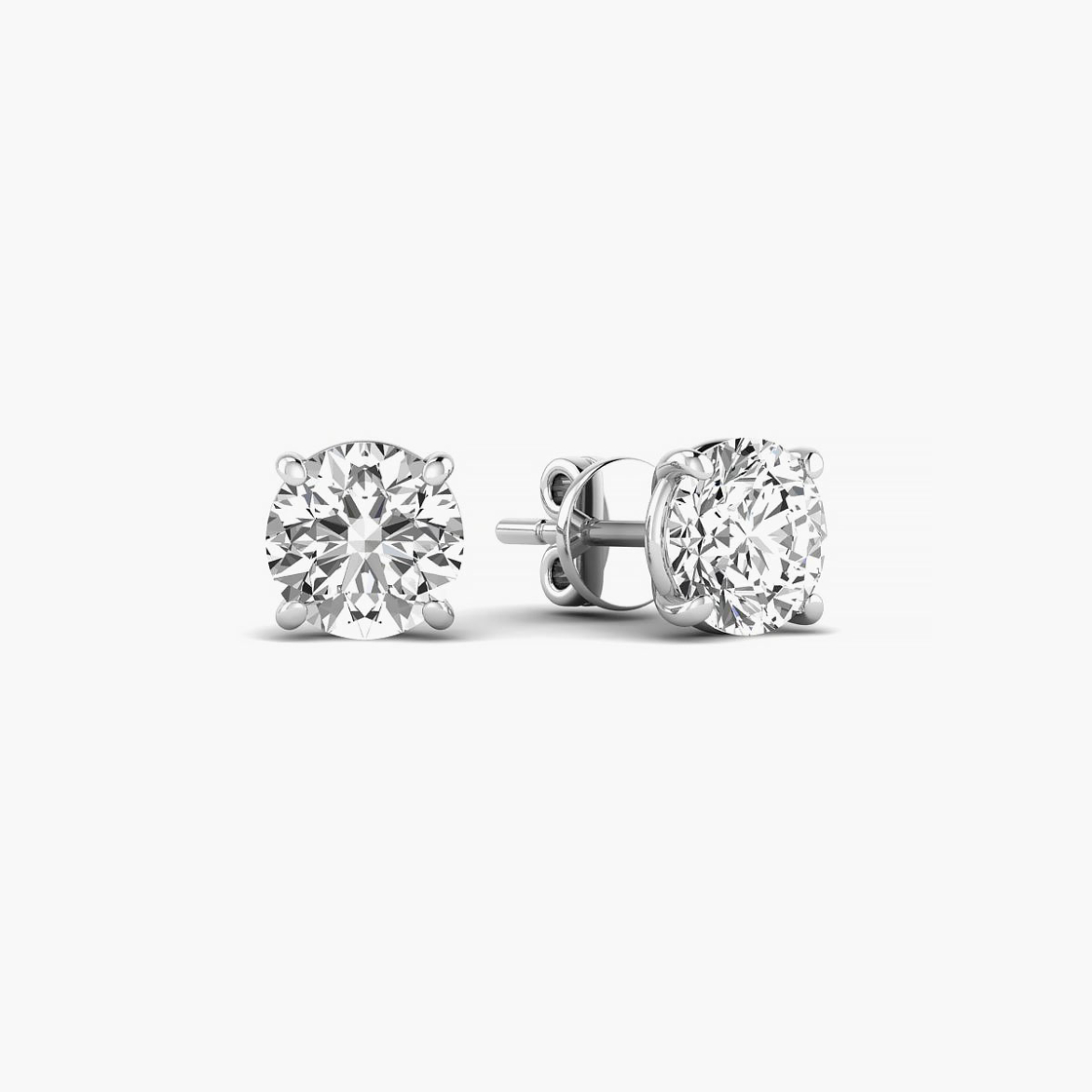
Lab Grown Diamond Stud Earring
14KT White Gold - Gift With Purchase