 Contact Us
 Appointment
Book An Appointment
Get in touch with our jewellery experts for virtual consultation
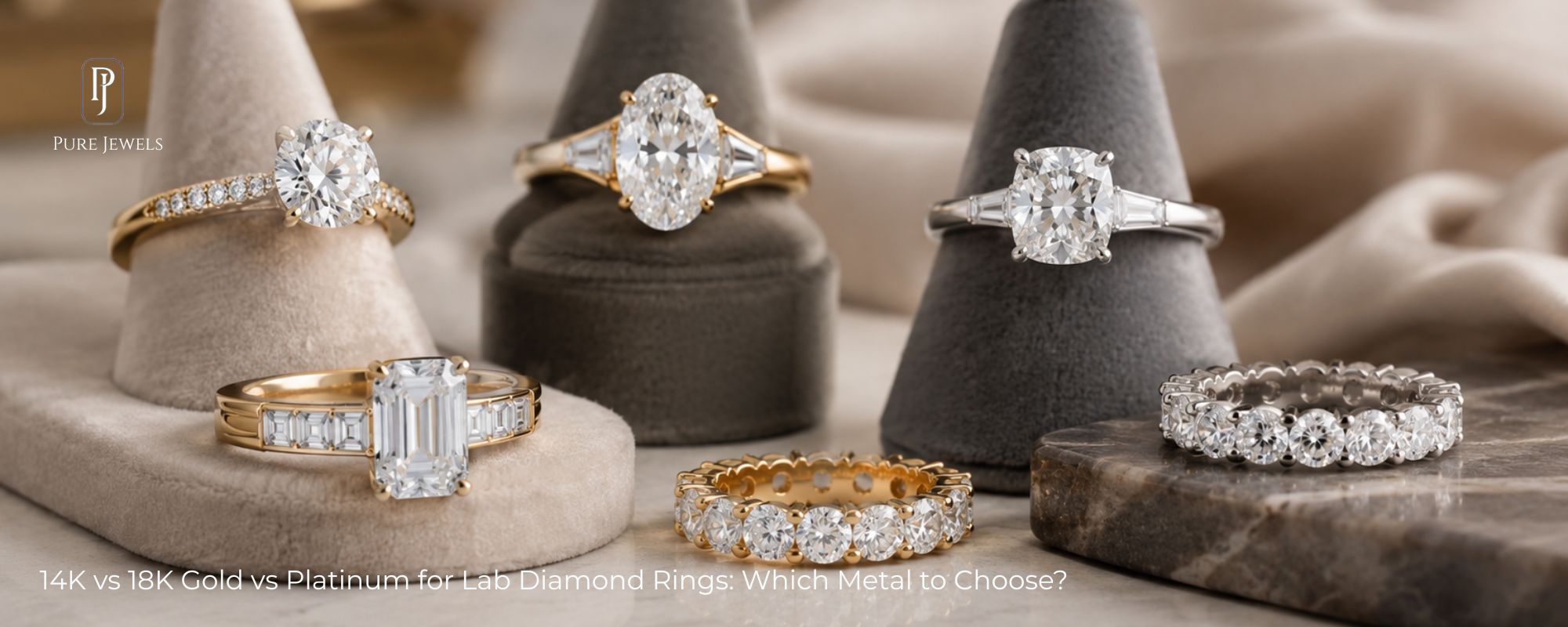
14K vs 18K Gold vs Platinum for Lab Diamond Rings: Which Metal to Choose?



.webp)


.webp)


 Share on Facebook
 Share on LinkedIn
 Share on WhatsApp
Choosing a lab-grown diamond ring is an exciting milestone, but the metal you pair it with matters just as much as the diamond itself. Whether you're looking for a men's gold diamond ring, a classic diamond bangle with diamonds, or diamond earrings for women, understanding the metal beneath those brilliant lab-grown stones can define how your jewellery looks, feels, and lasts over time.
At Pure Jewels, we craft every piece in 14K and 18K gold, and we often guide customers through the 14K vs 18K Gold vs Platinum question. This guide breaks it all down clearly.
Understanding Metal Purity: The Basics
Before comparing metals, it helps to understand what the numbers actually mean.
14K Gold contains 58.3% pure gold mixed with other metals like copper, silver, or zinc.
18K Gold contains 75% pure gold, making it richer in colour and purer in composition.
Platinum is nearly 95–98% pure platinum, a naturally white and incredibly dense metal.
Each of these has a distinct character that affects your ring's look, feel, durability, and price, especially when set with lab-grown diamonds.

Quick Comparison 14K vs 18K Gold vs Platinum
14K Gold for Lab Diamond Rings Durability Meets Value
14K gold is the most popular choice for everyday diamond jewellery and for good reason. Its higher alloy content makes it harder and more resistant to scratches than 18K gold, which is why it's especially favoured for real diamond rings for men and active wearers.
Key advantages of 14K gold:
More durable for daily wear
More affordable, making it accessible for larger designs like gold bangles with diamonds
Available in yellow, white, and rose gold tones
Holds gemstone settings firmly over time
The slight trade-off is that 14K gold has a slightly less intense colour compared to 18K, though most people find the difference barely noticeable in finished jewellery.
Best suited for: Men's diamond rings, diamond earrings for women, everyday bangles, and budget-conscious buyers who don't want to compromise on beauty.

18K Gold for Lab Diamond Rings: Richness and Prestige
If colour depth and purity matter to you, 18K gold delivers a visibly warmer, richer tone that elevates the brilliance of a lab-grown diamond. The higher gold content also means it's gentler on sensitive skin, a key consideration for pieces worn close to the body.
Key advantages of 18K gold:
Deeper, more luxurious gold colour
Ideal for white gold settings where a brighter, crisper look is desired
Excellent for solitaire and halo engagement rings
Preferred for high jewellery and bridal pieces
The one consideration with 18K is that it is slightly softer than 14K, meaning it may show fine surface scratches over the years of daily wear. However, with simple professional maintenance, it retains its brilliance for a lifetime.
Best suited for: Engagement rings, solitaire pendants, bridal sets, and men's gold diamond rings where appearance and prestige are priorities.

Platinum for Lab Diamond Rings: The Pinnacle of Purity
Platinum sits in a category of its own. As a naturally white metal, platinum never fades, never yellows, and never needs rhodium plating, qualities that make it a compelling long-term choice for lab-grown diamond rings.
Key advantages of platinum:
Completely hypoallergenic, ideal for sensitive skin
Naturally white colour enhances a diamond's brightness and fire
Develops a desirable patina over time (which many buyers love)
Extremely dense and heavy, giving jewellery a premium feel
However, platinum comes at a significantly higher price point. It is also more likely to develop a soft lustre (patina) from everyday knocks, though this is considered a mark of authenticity and character by many jewellery connoisseurs.
Best suited for: Heirloom pieces, high jewellery, premium men's diamond rings, and buyers who want a metal that lasts generations with minimal maintenance.
Skin Tone Compatibility: Which Metal Suits You Best?
Metal choice is also a personal style decision, and skin tone plays a significant role.
Yellow Gold (14K or 18K): Complements warm and olive skin tones beautifully. Adds warmth and richness to the overall look.
White Gold (14K or 18K): Flatters cool and neutral skin tones. Pairs elegantly with colourless lab grown diamonds for a sleek, modern look.
Rose Gold: A warm, feminine choice that suits all skin tones, particularly popular for fashion earrings and bangles.
Platinum: Its cool, bright white tone is especially stunning on fair to medium skin tones and enhances the white brilliance of lab-grown diamonds.
Price Considerations: Getting the Most Value
For buyers comparing lab-grown diamond ring metals from a value perspective:
14K gold is the most budget-friendly option without sacrificing quality. It is ideal for those who want to invest more in diamond size or clarity.
18K gold sits in the mid-range. You pay for purity and colour, which is worthwhile for solitaire and engagement ring designs.
Platinum commands a premium due to its rarity and density. A platinum ring uses more metal by weight than gold.
At Pure Jewels, all our diamond jewellery online is crafted in hallmarked 14K and 18K gold and certified by SGL, ensuring you receive verified quality at every price point.
Which Metal Should You Choose?
Here is a simple decision guide:
Choose 14K Gold if you want durability, everyday wearability, and the best value, perfect for men's diamond rings, gold bangles with diamonds, and casual diamond earrings for women.
Choose 18K Gold if you prioritise colour richness, luxury feel, and plan to wear the piece for special occasions, ideal for engagement rings, solitaire jewellery, and bridal sets.
Choose Platinum if you want a hypoallergenic, naturally white, low-maintenance metal with an heirloom-quality feel best suited for premium and high jewellery.

Frequently Asked Questions
Q1. Is 14K or 18K gold better for a men's diamond ring?
14K gold is generally better for men's diamond rings due to its superior scratch resistance and durability. It handles daily wear more effectively while offering excellent value.
Q2. Does platinum make a lab-grown diamond look brighter?
Yes. Platinum's naturally white colour reflects light into the diamond without any colour interference, which can enhance the brilliance and fire of a lab-grown diamond.
Q3. Is 18K gold good for sensitive skin?
Yes. 18K gold has a higher pure gold content, which means less alloy metal that can cause skin reactions. It is a good choice for those with mild metal sensitivities.
Q4. Can I get a gold bangle with diamonds in 14K gold?
Absolutely. 14K gold is an excellent choice for diamond bangles as it offers the durability needed for a piece worn frequently on the wrist.
Q5. What is the difference between white gold and platinum?
White gold is yellow gold alloyed with white metals and usually coated with rhodium for a bright finish. Platinum is a naturally white metal that doesn't require plating and is denser and more expensive.
Q6. Are Pure Jewels' rings available in both 14K and 18K gold?
Yes. At Pure Jewels, lab-grown diamond rings for women and men are available in both 14K and 18K gold, all hallmarked and SGL-certified for guaranteed purity and quality.
Q7. Which metal is best for real diamond rings for men?
14K gold strikes the best balance of durability, style, and affordability for men. Platinum is an excellent premium alternative for those who prefer a naturally white metal.

Contact Us
3rd Floor, Building E-2, F.P.108/P, Naginawadi Road, Opp. RJD Business HUB, Katargam, Surat - 395004.India


Limited Edition Gift with Purchase
A sparkling deal only while supplies last.
Spend ₹1,00,000 or more
and select one of these complimentary gifts
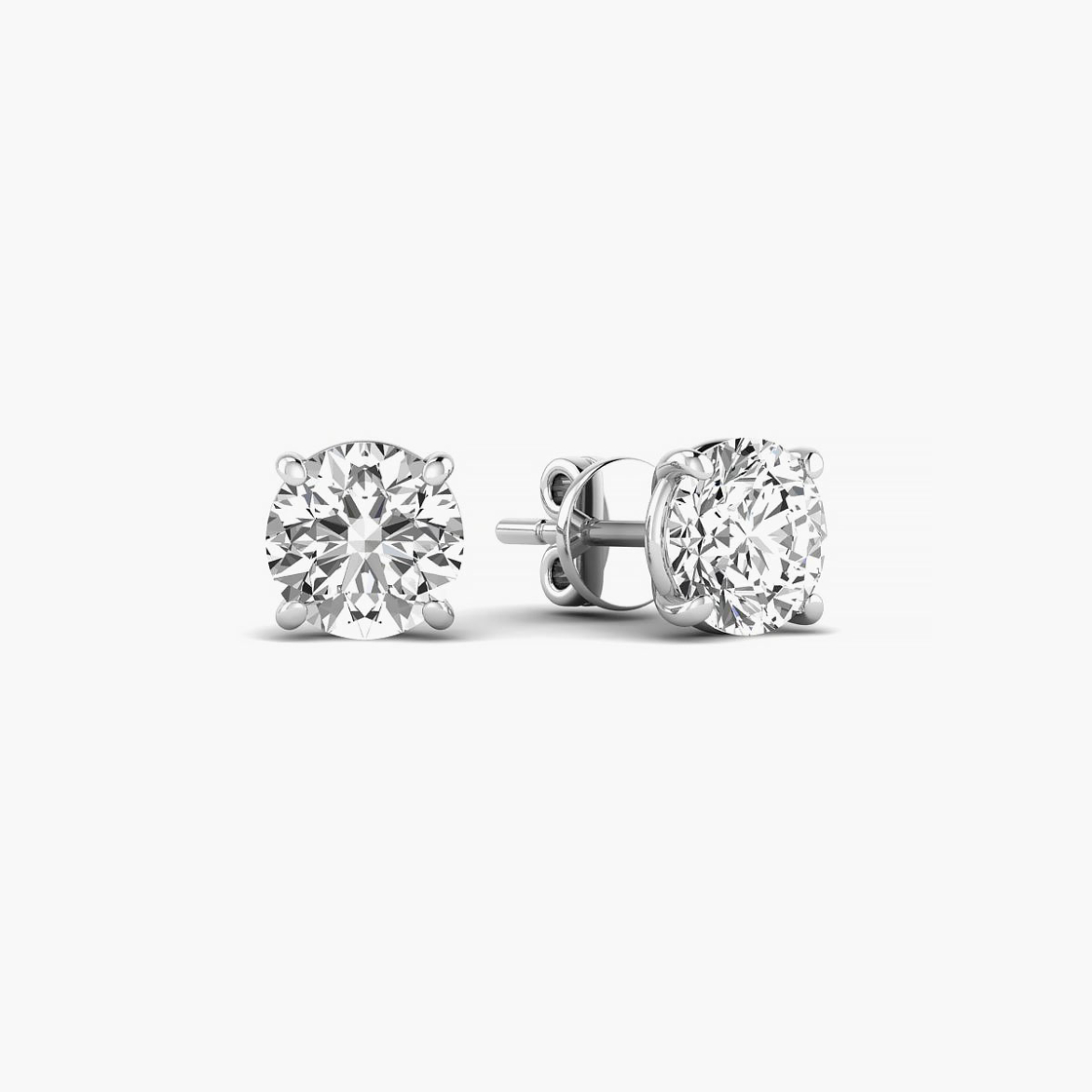
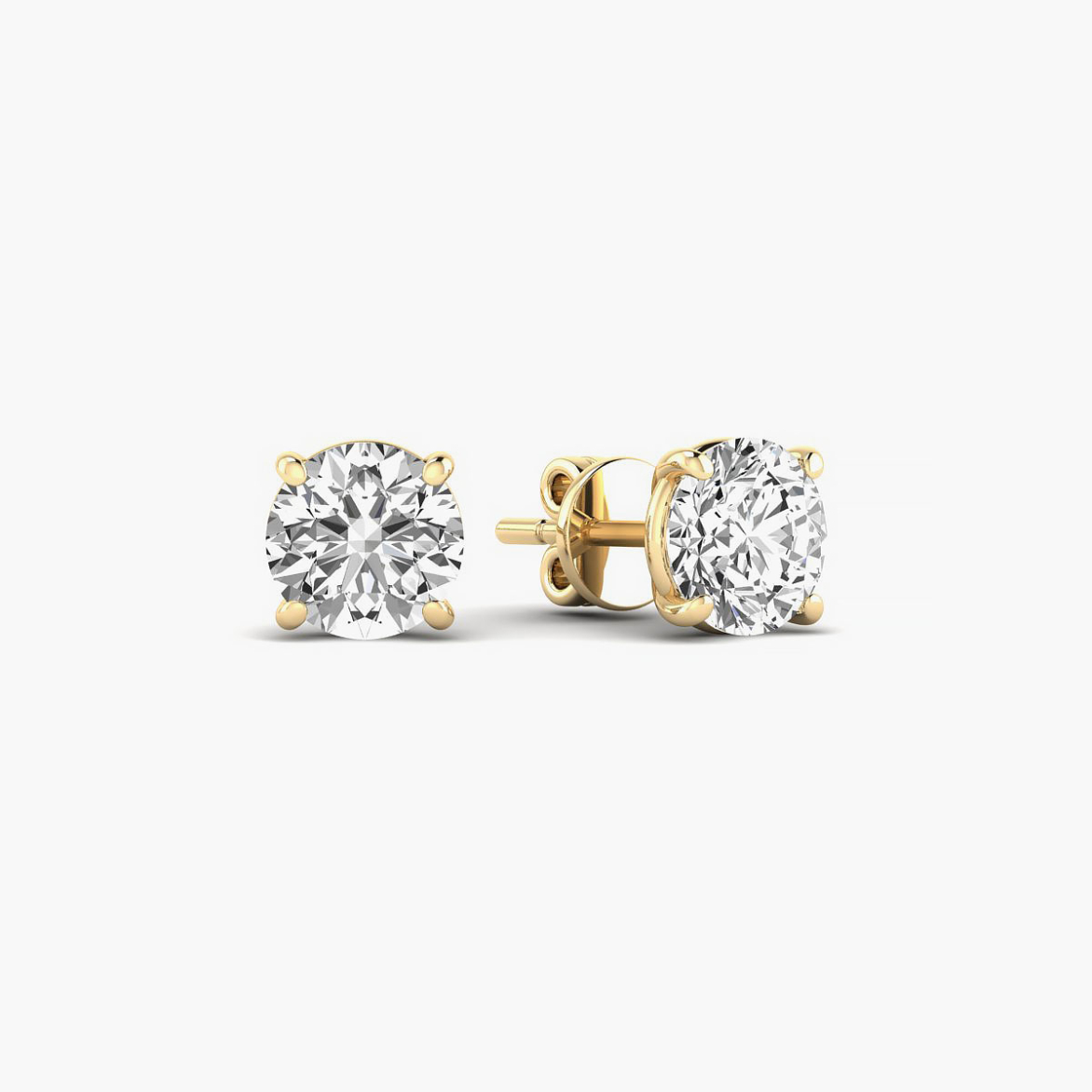
Lab Grown Diamond Stud Earring
14KT White Gold - Gift With Purchase