 Contact Us
 Appointment
Book An Appointment
Get in touch with our jewellery experts for virtual consultation
Custom vs. Ready-Made Diamond Engagement Rings Cost Guide


.webp)


.webp)


 Share on Facebook
 Share on LinkedIn
 Share on WhatsApp
Neither option is automatically more expensive. When the diamond, gold weight, and purity are the same, a custom ring built through CAD and casting often costs close to a ready-made ring and can come in below a branded one, while a fully hand-fabricated design usually costs more than both. The real price gap comes from the centre stone you choose, how the ring is made, and a few charges that rarely show up on the first quote.
Most couples assume "custom" means "premium". In practice, both routes are priced from the same building blocks, and once you can read those blocks on a quote, it becomes easy to see which route fits your budget.

How a Diamond Ring Quote Is Built in India
Every diamond engagement ring, custom or ready-made, is priced with the same basic formula:
Ring price = diamond value + (gold weight × day's gold rate) + making charges + design fee (custom only) + 3% GST
Diamond value. For a diamond ring, the stone is usually the largest share of the bill. Its cut, colour, clarity, and carat move the price more than any design choice.
Gold. Billed by weight at the day's rate, adjusted for purity such as 14K or 18K.
Making charges. The labour of casting, setting, polishing, and finishing.
Design fee. 3D design and prototypes on custom work, either billed separately or folded into making charges.
GST. 3% on the total value of a finished ring (explained below).
Here is where the two routes actually differ:
The diamond, gold, and GST lines follow the same rules either way. The difference comes from the making charges, design fee, and retail margin.

Why Ready-Made Rings Often Look Cheaper
Ready-made rings benefit from scale. Producing one design in large volumes lowers the manufacturing cost per piece, which usually shows up as a lower sticker price. You can also try the ring on and take it home the same day.
The trade-off sits inside that price. Ready-made rings carry retail markups, middlemen, and inventory costs, while custom rings can be priced more directly against materials and labour. You are also limited to the stones already set, so you may pay for a grade or size you would not have chosen yourself.
What Moves the Price of a Custom Ring
A custom ring's cost depends heavily on how it is built:
Production method. CAD-built custom work can run 10% to 30% below a comparable branded ring, while hand-fabrication from scratch usually costs more than either route.
Design complexity. Elaborate designs, many-stone settings, and technically complex work take more labour and cost more than simple ones.
Budget size. Custom labour is a fixed cost, so on a small budget it eats a larger share of the money that could go into the diamond. The higher the budget, the smaller the custom premium becomes as a share of the total.
Stone control. This is where custom can save money. You can trade one colour grade or clarity step for more carat weight, or choose lab-grown instead of accepting whatever is pre-set.

The Middle Path: Semi-Custom Rings
You don't have to choose between a fixed design and a blank page. A semi-custom ring starts from an existing design and changes a few details, such as the metal, the diamond grade, or an engraving. Because the design work already exists, it usually avoids a full design fee and takes less time than a ring built from scratch.
The terms are used loosely, so ask what a jeweller means. "Made-to-order" often means an existing design remade in your size or metal, while fully custom means designed from scratch around your specifications.
Lab-Grown or Natural: The Decision That Outweighs Everything Else
The gap between custom and ready-made is small compared with the gap between diamond types. A certified 1-carat lab-grown diamond runs roughly ₹35,000 to ₹55,000 as a loose stone in 2026, while a natural diamond of the same grade costs about ₹2.5 to 4 lakh.
Two points to know before comparing quotes:
Lab-grown diamonds have no universal price benchmark like the Rapaport list, so each brand sets its own price, and the same 1-carat stone may be ₹35,000 at one jeweller and ₹80,000 at another.
Lab-grown diamonds have a limited resale market and low residual value, so treat them as a purchase to wear, not an investment.

The Costs That Rarely Appear on the First Quote
GST on the full value. Gold jewellery sold to a consumer is generally taxed at 3% of the total transaction value, even when making charges are shown separately. The same applies to GST on lab-grown diamonds set in a finished ring, since the stone is billed as part of the jewellery, not as a separate item.
Using your own gold. This is the one place the custom route changes the tax. When you give your own gold to a goldsmith to make a ring, GST is charged at 5% on the making charges instead of 3%. Reusing family gold can still save money overall because you are not buying new metal.
Hallmarking. Selling non-hallmarked gold jewellery is now illegal in 392 districts, and every item sold must carry a HUID. Insist on a HUID whether your ring is custom or off the shelf, and verify it on the BIS CARE app.
Resizing. A plain wedding band is cheap to resize, but pavé or eternity designs can cost significantly more because the stones near the band have to be reset. Get the size right before casting.
Time. A custom process in India typically takes 4 to 8 weeks from brief to delivery, and complex designs or hard-to-source stones can add a week or two. Rushing it can add cost or limit your options.

Six Questions to Ask Before You Pay
Whichever route you take, these questions make two quotes directly comparable:
What is the diamond's certificate number? Verify the grades yourself instead of relying on the label.
What is the gold weight and purity? A lighter band can make one quote look cheaper.
Are making charges a flat amount or a percentage? Percentages rise with the gold rate.
Is there a design or CAD fee, and does it come off the final price if you proceed?
Is GST charged at 3% on the total? A separate 5% line on making charges is a question to ask.
Will the gold carry a HUID hallmark?

Which Option Should You Choose?
A ready-made ring makes sense if you want a classic solitaire or halo, your proposal is only days or a couple of weeks away, your budget is modest, or you want to try the ring on before paying.
A custom ring makes sense if you want to choose the exact diamond, reuse family gold, create a design you can't find in stores, or have at least 6 to 8 weeks before you need it.
A semi-custom ring makes sense if you love an existing design but want a better stone, a different metal, or a personal detail without a full design process.
Compare quotes on the same diamond grade, gold weight, and purity. That is the only fair way to tell which ring genuinely costs more.

Design Your Ring with Pure Jewels
Whether you choose ready-made, semi-custom, or fully custom, Pure Jewels crafts lab-grown diamond engagement rings in 14K hallmarked gold, with every piece certified by SGL Laboratory. You can pick from ready designs or create your own ring with the custom design service, and pieces are backed by a 100% exchange guarantee.
Frequently Asked Questions
Is a custom diamond engagement ring always more expensive?
No. A CAD-built custom ring often costs about the same as a comparable ready-made ring, while fully handmade designs usually cost more.
What GST applies to a diamond engagement ring?
A finished gold ring bought from a jeweller attracts 3% GST on the total value, including making charges.
Can I use my old gold for a custom ring?
Yes, and when you supply the gold and pay only for labour, that labour is billed as job work at 5% GST.
What is a semi-custom engagement ring?
It starts from an existing design and changes details like the diamond, metal, or engraving, usually at lower cost and in less time than a fully custom ring.
Why do two jewellers quote different prices for the same ring?
Lab-grown diamonds have no universal price benchmark, and making charges, design fees, and gold weight vary, so compare quotes line by line.

Contact Us
3rd Floor, Building E-2, F.P.108/P, Naginawadi Road, Opp. RJD Business HUB, Katargam, Surat - 395004.India


Limited Edition Gift with Purchase
A sparkling deal only while supplies last.
Spend ₹1,00,000 or more
and select one of these complimentary gifts
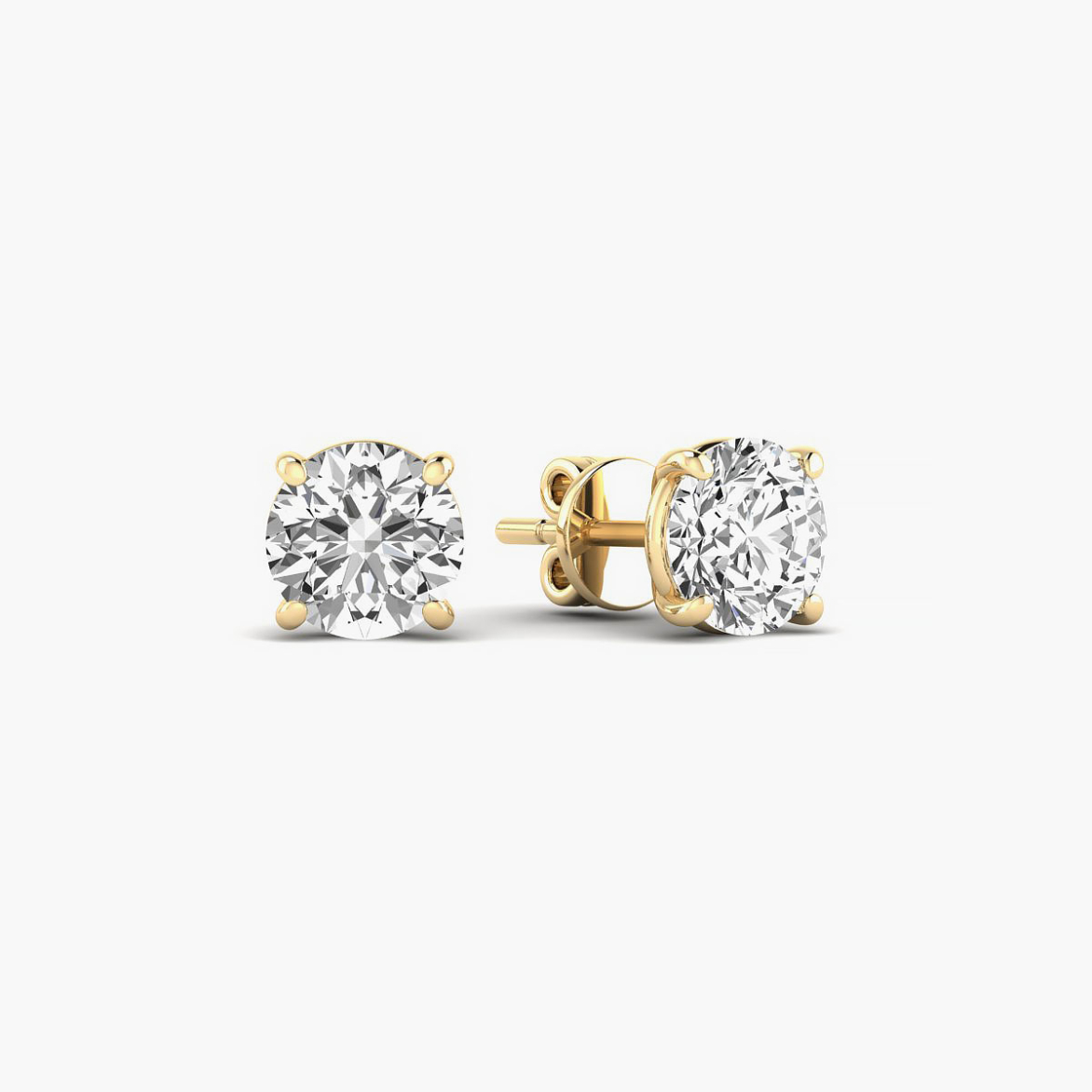
Lab Grown Diamond Stud Earring
14KT White Gold - Gift With Purchase