 Contact Us
 Appointment


Book An Appointment
Get in touch with our jewellery experts for virtual consultation
5 Facts About Whether Lab-Grown Diamonds Pass a Diamond Tester




.webp)
.webp)


.webp)


 Share on Facebook
 Share on LinkedIn
 Share on WhatsApp
Yes, lab-grown diamonds pass a standard diamond tester. They are real diamonds, chemically, physically, and optically identical to mined ones, so a tester reads them as “diamond.” A handheld tester only answers “is this a diamond?” It cannot tell you whether the diamond was grown in a lab or formed in the earth.
Many buyers worry that a lab-grown stone will “fail” at a jeweller’s counter. The five facts below explain why it won’t, and what a tester can and cannot tell you.
Fact 1: Lab-Grown Diamonds Conduct Heat Exactly Like Natural Diamonds
The most common handheld tester is a thermal conductivity probe. You touch its tip to the stone, and the device checks how fast heat moves away from the contact point. Diamond is an unusually good heat conductor, much better than most gemstones and imitations, so a diamond produces a distinctive reading.
A lab-grown diamond is crystallised carbon with the same atomic structure as a natural one, so it conducts heat in the same way and gets the same reading. This is not a loophole in the test. It follows from what the stone is. The same logic is why both kinds are graded on the same four Cs: cut, colour, clarity, and carat weight.
Fact 2: Moissanite Can Fool a Basic Tester, but Not an Advanced One
Moissanite is a different gemstone, often sold as a diamond alternative. It also conducts heat well, so an older thermal-only tester can misread it as a diamond.
Better testers add an electrical conductivity check. Moissanite conducts electricity, while most diamonds, including lab-grown ones, do not, so a combined thermal and electrical tester can separate them. Rare blue diamonds containing boron are an exception, because they can conduct electricity whether natural or lab-grown, but they are uncommon in jewellery. Results can also vary with the tester’s quality and calibration, so a single reading on a cheap device is not final proof.

Fact 3: Imitations Like Cubic Zirconia and Glass Usually Fail
Cubic zirconia and glass do not conduct heat like diamond, so a thermal tester flags them as “not diamond” quickly. Here is how common stones compare:
Our About Lab Diamonds page explains in more detail how lab-grown diamonds differ from simulants.
Fact 4: A Tester Confirms the Material, Not the Origin
A tester shows “diamond” for both lab-grown and natural stones, so it cannot tell them apart. A jeweller’s loupe or an ordinary microscope cannot reveal origin either. If someone tells you they can identify a lab-grown diamond with a handheld tester, treat that claim with caution.

Fact 5: Only Laboratory Equipment and a Grading Report Confirm Origin
Gemological laboratories identify how a diamond was formed using specialised instruments. These include UV fluorescence imaging, which shows the stone’s growth pattern, and spectroscopy, which detects trace features. These tools are not available at a typical jewellery counter.
For buyers, the practical answer is the grading report. A report from an independent lab states the stone’s cut, colour, clarity, carat weight, and whether it is lab-grown. Every Pure Jewels piece is certified by SGL Laboratory, so the origin of your stone is documented instead of left to a counter test.
How to Verify a Lab-Grown Diamond You Own or Are Buying
Read the grading report. Check that the carat weight, shape, and grades match the piece you are receiving.
Ask for independent verification if you want extra assurance. A qualified gemologist or gemological laboratory can confirm the stone.
Buy from a seller who documents origin. A “pass” on a tester only confirms the material and says nothing about quality.
Because a tester pass says nothing about cut, colour, or clarity, two diamonds that both pass can differ a lot in look and price. Browse our solitaire pendant, engagement rings, or couple rings to see certified pieces, or contact our team for a virtual consultation.

Frequently Asked Questions
Do lab-grown diamonds pass a diamond tester?
Yes. Standard testers measure how a stone conducts heat, and lab-grown diamonds match natural diamonds because they share the same chemical composition and crystal structure. Both CVD and HPHT lab-grown diamonds read as diamond.
Can a fake diamond pass a diamond tester?
Sometimes. Moissanite can read as diamond on a basic thermal-only tester because it also conducts heat well. Testers with electrical conductivity settings can tell them apart. Cubic zirconia and glass usually fail.
Do lab-grown diamonds test as moissanite?
No. Lab-grown diamonds are made of carbon, while moissanite is silicon carbide. A tester with an electrical conductivity check reads moissanite as moissanite and a lab-grown diamond as diamond.
How can you tell if a diamond is lab-grown?
You cannot tell by eye, with a loupe, or with a basic tester. A gemological laboratory can identify origin using specialised equipment. For everyday buyers, the grading report is the practical proof.
Can a jeweller tell if my diamond is lab-grown?
Not with a handheld tester or a normal microscope. Most jewellers send a stone to a gemological laboratory for that, or rely on the stone’s grading report.

Contact Us
3rd Floor, Building E-2, F.P.108/P, Naginawadi Road, Opp. RJD Business HUB, Katargam, Surat - 395004.India


Limited Edition Gift with Purchase
A sparkling deal only while supplies last.
Spend ₹1,00,000 or more
and select one of these complimentary gifts
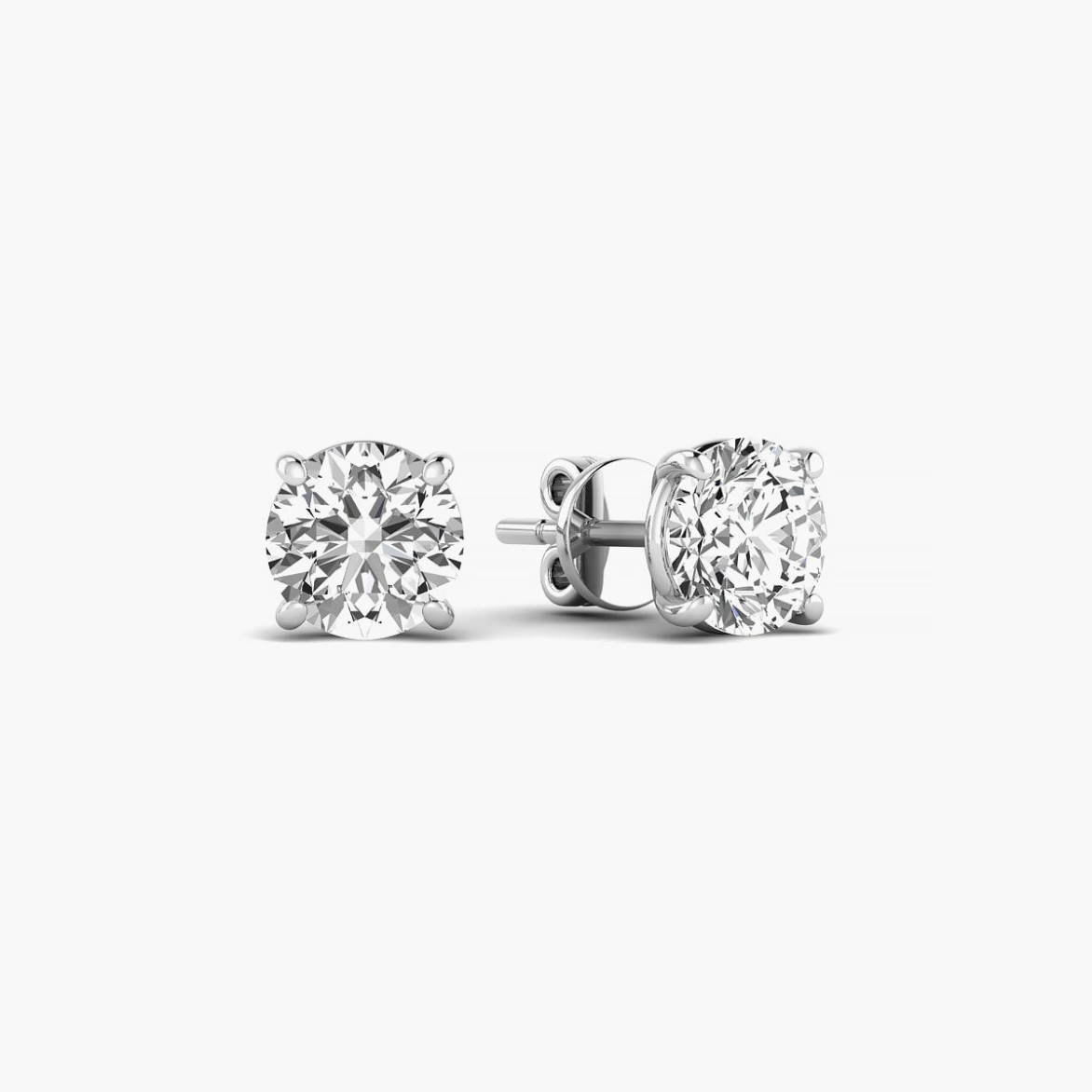
Lab Grown Diamond Stud Earring
14KT White Gold - Gift With Purchase