 Contact Us
 Appointment
Book An Appointment
Get in touch with our jewellery experts for virtual consultation
CVD vs HPHT Lab Diamonds India: Which Process Makes Better Diamonds?


.webp)

.webp)
.webp)
.webp)


 Share on Facebook
 Share on LinkedIn
 Share on watsapp
When you buy a lab-grown diamond in India, you are buying a stone that was created using one of two scientifically advanced processes: CVD or HPHT. Most buyers never think to ask which method was used, yet it can influence the stone's appearance, clarity characteristics, and ultimately, the value you receive. This guide explains both processes clearly, compares them honestly, and helps you understand what to look for.
What Are CVD and HPHT? Understanding the Two Lab Diamond Processes
Lab-grown diamonds are real diamonds, chemically, physically, and optically identical to mined diamonds. The difference lies in how they are created. Two proven scientific methods are used:
CVD (Chemical Vapour Deposition): A process that grows diamond crystals from carbon gas in a precisely controlled atmosphere.
HPHT (High Pressure, High Temperature): A process that replicates the natural diamond formation conditions using intense heat and pressure, mirroring what happens deep within the Earth's mantle.
Both methods produce diamonds that score 10 on the Mohs hardness scale, the highest possible, and are graded using the same 4Cs system as mined diamonds: cut, colour, clarity, and carat weight.

How CVD Diamonds Are Made: Step-by-Step
CVD, or Chemical Vapour Deposition, is a more recently developed method that has become widely adopted in lab-grown diamond production. Here is how the process works:
A thin slice of diamond called a diamond seed is placed inside a sealed chamber.
The chamber is filled with carbon-rich gases, typically methane and hydrogen.
The gases are then energised using microwave technology or another energy source, which breaks the molecular bonds and releases carbon atoms.
These carbon atoms settle onto the diamond seed, layer by layer, forming a diamond crystal over a period of weeks.
The resulting rough diamond is then cut, polished, and graded just like any mined diamond would be.
CVD Clarity Advantage
Because CVD diamonds grow in a controlled, low-pressure environment, they tend to have fewer metallic inclusions. This gives CVD diamonds a recognised advantage in terms of clarity, particularly at higher carat weights. Many CVD diamonds achieve VS or VVS clarity grades, making them a compelling choice for buyers who prioritise a clean, brilliant stone.
How HPHT Diamonds Are Made: Step-by-Step
HPHT, or High Pressure, High Temperature, is the original method of creating lab-grown diamonds. It closely mirrors the natural process by which diamonds form on the Earth. Here is how it works:
A small diamond seed is placed at the centre of a growth cell, surrounded by a carbon source, typically graphite.
The cell is subjected to extremely high pressure (around 1.5 million pounds per square inch) and high temperatures (approximately 1,300–1,600°C).
Under these extreme conditions, the carbon source melts and begins to form around the diamond seed, crystallising into a diamond over time.
The rough diamond is then extracted, cut, polished, and graded.
HPHT and Colour
HPHT is particularly effective for producing diamonds in the higher colour grades. The process is also used to improve the colour of existing diamonds, including some natural diamonds, by exposing them to high-pressure and high-temperature treatment. This makes HPHT a well-established and proven method for producing quality lab-grown diamonds.

CVD vs HPHT: Full Comparison Table
Here is a side-by-side comparison of both lab diamond creation processes to help you understand the key differences.

CVD vs HPHT: Does the Process Matter When Buying Jewellery?
For most Indian buyers purchasing lab-grown diamond jewellery, whether a ring, pendant, earrings, or bracelet, the growth method is a secondary factor. What matters most is the quality of the finished diamond: its cut, colour, clarity, and carat weight, as confirmed by its certification.
That said, here is what to keep in mind:
Both CVD and HPHT diamonds are real diamonds. No process produces a superior or inferior diamond in absolute terms; each has its own characteristics.
CVD has a clarity advantage at higher carat weights, with fewer metallic inclusions being common.
HPHT is particularly well-suited to producing diamonds with excellent colour grades.
Your certification tells you the method used: IGI, GIA, and SGL grading reports all note whether a stone is CVD or HPHT grown, so you always know what you are buying.
The quality of the cut and the craftsmanship of the jewellery setting have a far greater impact on the beauty of your piece than the growth method alone.
What Pure Jewels Uses
Pure Jewels works with both CVD and HPHT lab-grown diamonds, selecting stones based on the quality, clarity, and design requirements of each jewellery piece. Every diamond used is SGL-certified, with GIA and IGI certification available on request, so regardless of the growth method, you receive a fully verified, high-quality stone.
Expert Note: When shopping for lab-grown diamond jewellery, always ask whether a certification is available and whether the growth method is noted on the report. This is a mark of transparency from any reputable jeweller.
Frequently Asked Questions About CVD and HPHT Lab Diamonds
Q: Is CVD better than HPHT for lab-grown diamonds?
Neither process is objectively better than the other. CVD diamonds tend to have fewer metallic inclusions, giving them a clarity advantage at higher carat weights. HPHT diamonds are well-suited to achieving excellent colour grades. Both produce real, certified diamonds of high quality. The finished stone's 4Cs and its certification matter far more than the process used.
Q: Can you tell the difference between a CVD and HPHT diamond with the naked eye? No. Both CVD and HPHT diamonds are visually identical to each other and to mined diamonds. The growth method can only be determined through advanced gemological testing, which is why it is noted on your grading certificate from GIA, IGI, or SGL.
Q: Does the growth method affect the price of a lab-grown diamond?
The growth method alone does not significantly determine price. Price is primarily driven by the 4Cs: carat, cut, colour, and clarity, along with the metal type and design of the jewellery. The certification body can also have a moderate effect on pricing.
Q: Are CVD and HPHT diamonds both certified?
Yes. Both CVD and HPHT lab-grown diamonds are certified by recognised gemological institutions, including GIA, IGI, and SGL. The growth method is noted on the grading report, giving you full transparency about your purchase.
Q: Do Pure Jewels use CVD or HPHT diamonds?
Pure Jewels works with both CVD and HPHT lab-grown diamonds, selecting stones based on quality and design requirements. Every piece is SGL-certified as standard, with GIA and IGI certification available on request.
Q: Are lab-grown diamonds, whether CVD or HPHT, as durable as mined diamonds?
Yes. Both CVD and HPHT diamonds score 10 on the Mohs hardness scale, the same as mined diamonds. They are equally durable and suitable for all types of jewellery, including engagement rings and everyday wear.
Q: Will a grading report tell me if my diamond is CVD or HPHT?
Yes. Grading reports from GIA, IGI, and SGL all include the growth method CVD or HPHT as part of the laboratory-grown diamond identification. This ensures complete transparency for every buyer.

Contact Us
3rd Floor, Building E-2, F.P.108/P, Naginawadi Road, Opp. RJD Business HUB, Katargam, Surat - 395004.India


Limited Edition Gift with Purchase
A sparkling deal only while supplies last.
Spend ₹1,00,000 or more
and select one of these complimentary gifts
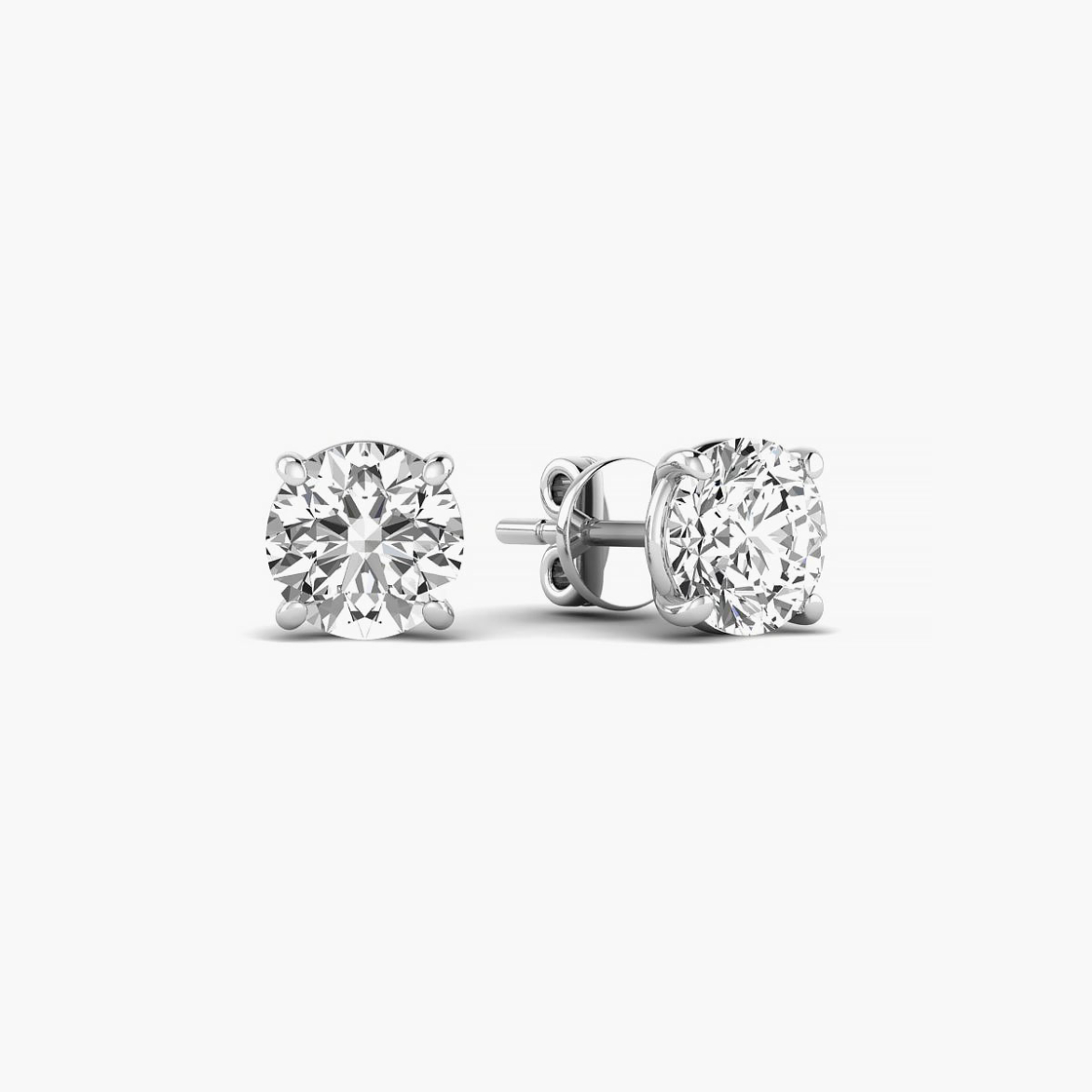
Lab Grown Diamond Stud Earring
14KT White Gold - Gift With Purchase