 Contact Us
 Appointment

Book An Appointment
Get in touch with our jewellery experts for virtual consultation
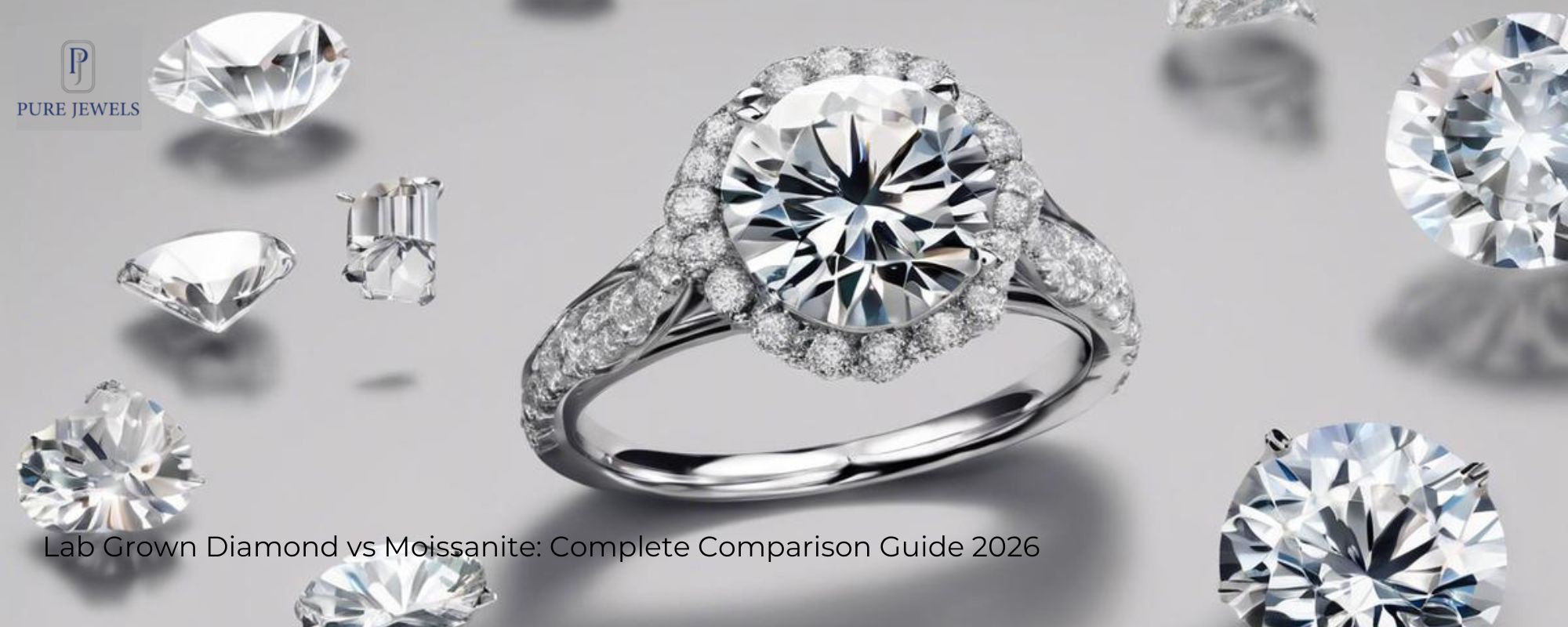
Lab Grown Diamond vs Moissanite: Complete Comparison Guide 2026


.webp)
.webp)
.webp)
.webp)


 Share on Facebook
 Share on LinkedIn
 Share on WhatsApp
Lab Grown Diamond vs Moissanite: Complete Comparison Guide 2026
If you're planning to buy diamond jewellery in 2026, whether it's a 1-carat solitaire diamond ring, a solitaire pendant, or a pair of dangler earrings, you've likely come across two options: lab-grown diamonds and moissanite. Both are popular. Both are beautiful. But they are not the same.
This guide will walk you through the key differences in hardness, brilliance, price, certification, and resale value so you can make an informed decision. And by the end, you'll know exactly which one is worth your money.
What Are Lab-Grown Diamonds?
Lab-grown diamonds are real diamonds. They are created in a laboratory using advanced technology, either HPHT (High Pressure, High Temperature) or CVD (Chemical Vapour Deposition), that replicates the exact natural process of diamond formation. The result is a stone that is physically, chemically, and optically identical to a mined diamond.
At Pure Jewels, every lab-grown diamond used in jewellery, from diamond bracelet designs to solitaire rings, is certified by recognised gemological institutions, including IGI and SGL. They are set in hallmarked 14kt and 18kt gold and are conflict-free and sustainable.
Key facts about lab-grown diamonds:
Chemical composition: 100% pure carbon
Hardness: 10 on the Mohs scale, the hardest material on Earth
Brilliance: Identical to mined diamonds
Certification: IGI, SGL certified
Cost: 30–40% less than mined diamonds of equal quality
What Is Moissanite?
Moissanite is a gemstone that was first discovered in a meteor crater. Today, it is lab-created and used as a diamond alternative. While it is visually similar to a diamond, moissanite is a fundamentally different material; it is made of silicon carbide, not carbon.
Moissanite is popular because it is affordable and has high brilliance. However, it is not a diamond, and that distinction matters when it comes to certification, resale, and long-term value.
Key facts about moissanite:
Chemical composition: Silicon carbide (SiC)
Hardness: 9.25 on the Mohs scale
Brilliance: High, but with a different light pattern (more rainbow-like)
Certification: Not graded by IGI as a diamond.
Cost: Lower than lab-grown diamonds

Head-to-Head Comparison Lab Diamond vs Moissanite
Hardness and Durability
When it comes to everyday jewellery diamond bangles designs, diamond bracelet designs, and rings worn daily, durability is everything. Lab-grown diamonds score a perfect 10 on the Mohs hardness scale, making them completely scratch-resistant. Moissanite scores 9.25, which is excellent, but not equal to a diamond.
For pieces like a 1-carat solitaire diamond ring that will be worn every day for decades, a lab diamond's superior hardness makes it the stronger long-term choice.
Brilliance and Light Performance
Both stones are brilliant, but they sparkle differently. Lab-grown diamonds produce the same white light brilliance as mined diamonds: a classic, elegant sparkle that has been prized for centuries. Moissanite, due to its different refractive index, produces a more rainbow-like, colourful fire that some people find too flashy, especially in larger stones.
For jewellery like a diamond solitaire pendant or dangler earrings, the clean, white sparkle of a lab diamond is widely considered more refined and versatile.
Price Comparison
Lab-grown diamonds offer exceptional value, significantly more affordable than mined diamonds, while delivering the same quality and prestige. Moissanite is cheaper, but it comes with trade-offs in certification and resale value.
Certification

This is one of the most important differences. Lab-grown diamonds are graded and certified by the world's leading gemological institutions, IGI and SGL, based on the 4Cs: cut, colour, clarity, and carat. This means you receive documented proof of your stone's quality.
Moissanite is not graded by IGI as a diamond. It comes with its own certificates, but these do not carry the same universal recognition or resale credibility.
At Pure Jewels, every lab-grown diamond, whether set in diamond bangles, pendants, or solitaire rings, comes with SGL certification, giving you complete assurance of quality and authenticity.
Resale Value
Lab-grown diamonds have resale value. While they sell at a lower value than mined diamonds, they can be exchanged and resold. Moissanite has minimal resale value in comparison. If long-term value matters to you, especially for significant pieces like a 1-carat solitaire diamond ring, a lab-grown diamond is the wiser investment.
Which One Is Right for You?
The answer depends on what matters most to you. Here's a simple breakdown:
Choose a Lab Grown Diamond if:
You want a real diamond with full certification
You are buying for a significant occasion, such as an engagement, an anniversary, or Mother's Day
You value long-term durability and resale potential
You want jewellery that will be passed down as an heirloom
You are shopping for pieces like solitaire rings, diamond pendants, or fine bracelets
Consider Moissanite if:
Budget is the primary constraint
The piece is for casual, occasional wear
Certification and resale are not priorities
For most buyers investing in meaningful jewellery from diamond bracelet designs to diamond solitaire pendants, a lab-grown diamond from a certified brand like Pure Jewels is the clear winner.
Lab-Grown Diamond Jewellery at Pure Jewels: What You Can Shop
Pure Jewels offers a comprehensive range of certified lab-grown diamond jewellery for every occasion and every budget:
Diamond Bangles Designs traditional elegance with modern lab-diamond brilliance
Diamond Bracelet Designs from tennis bracelets to fashion bracelets and bangles
Diamond Solitaire Pendants timeless, wearable, and deeply personal
Dangler Earrings in Gold statement drops crafted in 14kt and 18kt gold
Gold Pendant for Kids: delicate, certified lab diamond pieces for little ones
1 Carat Solitaire Diamond Ring, the ultimate expression of diamond luxury
Every piece at Pure Jewels is set in hallmarked gold, certified by SGL, and backed by a 15-day return policy, 100% exchange guarantee, and free shipping with insurance.

The Pure Jewels Advantage: Why Lab Diamonds Win
Pure Jewels has been featured in Outlook India, Bombay Times, and other leading media as a brand leading the lab-grown diamond revolution in India. Associated with IGI, SGL, and GJEPC, Pure Jewels brings together ethical sourcing, certified quality, and brilliant design all at 30–40% less than the cost of mined diamond jewellery.
When you buy from Pure Jewels, you're not choosing a diamond alternative. You're choosing a real diamond sustainably created, expertly certified, and beautifully crafted.
Pros and Cons Summary
Frequently Asked Questions (FAQs)
Is a lab-grown diamond better than moissanite?
Yes, for most buyers. Lab-grown diamonds are real diamonds identical in hardness, brilliance, and chemical composition to mined diamonds. They are certified by IGI and SGL and carry resale value. Moissanite is a different gemstone (silicon carbide) and is not graded as a diamond.
Can you tell the difference between a lab diamond and moissanite?
Yes, with the right equipment. A trained gemologist or diamond tester can distinguish between the two. Lab-grown diamonds pass all standard diamond tests. Moissanite is not identified as a different stone.
Are lab-grown diamonds worth buying in 2026?
Absolutely. Lab-grown diamonds offer the same quality as mined diamonds at 30–40% less cost, are certified, conflict-free, and sustainable. For pieces like a 1-carat solitaire diamond ring or diamond solitaire pendant, they offer outstanding value.
Do lab-grown diamonds have resale value?
Yes. Lab-grown diamonds can be exchanged or resold, though at a lower value than mined diamonds. Pure Jewels also offers a 100% exchange guarantee on all purchases.
Is moissanite a good choice for a diamond bracelet or bangle?
Moissanite can work for casual jewellery. However, for fine jewellery like diamond bracelet designs or diamond bangles that you intend to wear daily or gift as a keepsake, a certified lab-grown diamond is the superior and more credible choice.
Does Pure Jewels offer gold pendants for kids?
Yes. Pure Jewels offers a dedicated kids jewellery collection, including delicate gold pendants set with lab-grown diamonds certified, safe, and crafted with the same quality standards as all Pure Jewels pieces.

Contact Us
3rd Floor, Building E-2, F.P.108/P, Naginawadi Road, Opp. RJD Business HUB, Katargam, Surat - 395004.India

Limited Edition Gift with Purchase
A sparkling deal only while supplies last.
Spend ₹1,00,000 or more
and select one of these complimentary gifts
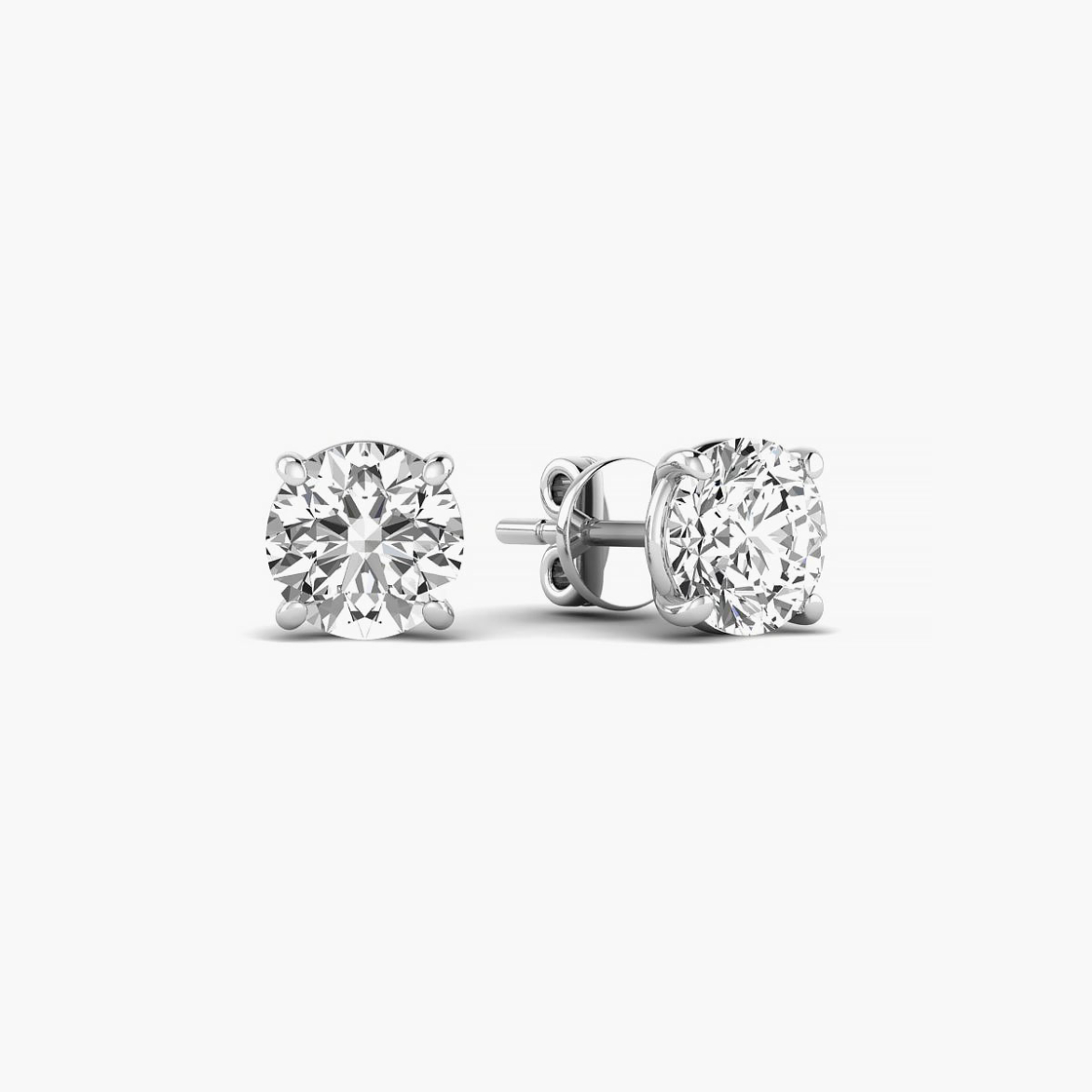
Lab Grown Diamond Stud Earring
14KT White Gold - Gift With Purchase