 Contact Us
 Appointment
Book An Appointment
Get in touch with our jewellery experts for virtual consultation
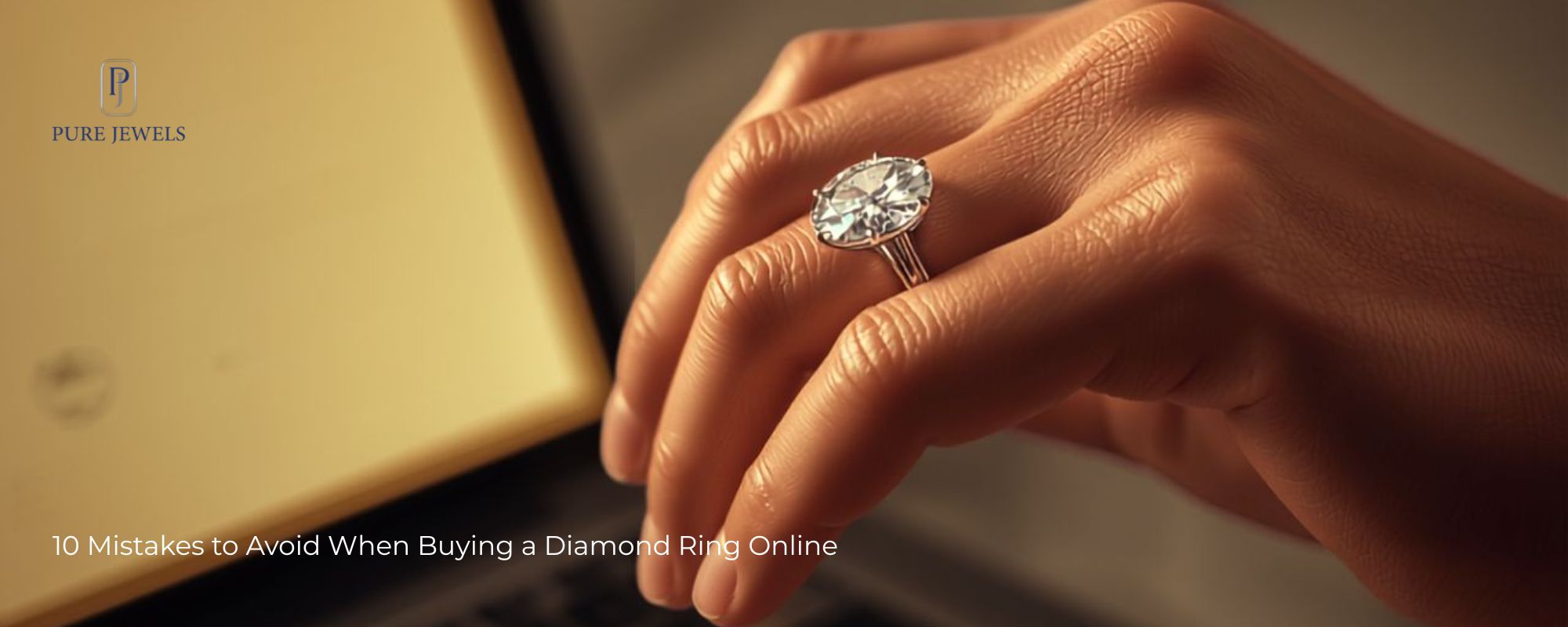
10 Mistakes to Avoid When Buying a Diamond Ring Online


.webp)
.webp)
.webp)


 Share on Facebook
 Share on LinkedIn
 Share on WhatsApp
The biggest mistakes are skipping the grading report, chasing carat and colour over cut, guessing your ring size, and not checking the return window. Verify these four before checkout.
Buying a diamond ring online means you can't hold the stone or ask questions in person. That's where most pitfalls happen. At Pure Jewels India, every lab-grown diamond comes with certification available on request (SGL / IGI also recognised), plus a clear 15-day return and exchange policy.
1. Skipping the Official Grading Report
A diamond ring without an independent grading report is a ring you're buying on trust alone. The report should verify the 4Cs - cut, colour, clarity, and carat - for the exact stone in your ring, not just state a general brand policy. At Pure Jewels India, certification is available on request, issued through SGL, with IGI also recognised as a trusted grading institute.
Fix: Ask whether the certificate covers the specific diamond in your ring and get it in writing before payment.
2. Fixating on Carat and Colour Over Cut and Brilliance
Many buyers chase the biggest carat number or the whitest colour grade, but cut is what actually determines how a diamond catches and reflects light. A well-cut smaller stone will often out-sparkle a larger, poorly cut one - the brilliance is in the proportions, not just the size.
Fix: Ask for the cut grade specifically, and where possible, view close-up or video imagery of the actual stone rather than relying on carat weight alone.

3. Guessing Your Ring Size
Ring size is one of the biggest causes of online jewellery returns. A size that "feels about right" based on an old ring or a guess is rarely accurate - finger size also shifts with temperature and time of day.
Fix: Use a proper ring sizer or printable sizing guide, and measure later in the day when fingers are slightly more swollen.
4. Ignoring the Return and Exchange Window
Not checking the return window is one of the costliest mistakes buyers make, especially for engagement rings that may need resizing after gifting. Pure Jewels India offers a 15-day, no-questions-asked return policy on non-customised pieces, along with a separate exchange and buy-back option that credits 100% of the original purchase price toward a new piece of equal or higher value.
Fix: Confirm whether the window means a refund, store credit, or exchange only - these are not the same thing.
5. Choosing Based on Price Alone
The cheapest ring online isn't automatically the best value. Lab-grown diamonds are typically around 50% less expensive than mined diamonds of comparable size and quality - a genuine saving - but an unusually low price on top of that discount can signal weak cut quality or missing certification.
Fix: Compare price against certification, metal purity, and cut quality - not price in isolation.
6. Not Verifying Lab-Grown vs Mined Diamond Origin
Some listings blur the line between "diamond" and "diamond simulant" (like moissanite or cubic zirconia) with vague marketing language. A genuine lab-grown diamond is chemically, physically, and optically identical to a mined diamond, with the same 10/10 Mohs hardness - a simulant is not.
Fix: Look for the words "lab-grown diamond" explicitly stated, not just "diamond jewellery."

7. Overlooking Gold Purity (KT) Details
Listings that don't specify gold purity leave you guessing about durability and value. List this clearly, with rings available in 14KT and 18KT solid gold - a detail that affects both price and how well the ring holds up to daily wear.
Fix: Confirm the exact karatage in the product description, not just "gold" as a generic term.
8. Skipping Return Packaging and Documentation Rules
Even with a good return policy, returns can be rejected over technicalities - unworn condition, original packaging, or a missing invoice. This trips up more buyers than the policy terms themselves.
Fix: Keep the original box, invoice, and certificate untouched until you're certain about keeping the ring.
9. Assuming Resale Value Equals Purchase Price
Diamond rings, like most fine jewellery, don't resell at the price you paid - this applies to both lab-grown and mined stones, though lab-grown diamonds' lower entry price partly offsets this. Buying purely as an "investment" is a common misconception.
Fix: Buy for the design and sentiment first; treat resale value as a bonus, not the primary reason to purchase.
10. Not Asking About Customisation Limits
Many buyers assume all rings can be resized, engraved, or modified after purchase - but customised and engraved pieces are usually excluded from standard return and exchange policies.
Fix: If you want a custom or engraved ring, confirm the exchange terms for that specific piece before you order.

Frequently Asked Questions
Is it safe to buy a diamond ring online?
Yes, provided the retailer offers a grading report on request, a clear return and exchange window, and verifiable business details. It covers all three, with SGL certification available on request and a 15-day return/exchange policy on non-customised pieces.
Why does cut matter more than carat weight?
Cut determines how light travels through and reflects off a diamond, which is what creates brilliance and sparkle. A well-cut smaller diamond can appear more radiant than a larger, poorly cut one - so cut quality should be checked alongside carat weight, not instead of it.
What if my ring doesn't fit after delivery?
Check the retailer's return or exchange policy before ordering. Pure Jewels India offers a return or exchange window on non-customised pieces.
Are lab-grown diamonds cheaper than mined diamonds?
Yes, lab-grown diamonds typically cost around 50% less than mined diamonds of similar size and quality, while sharing the same physical, chemical, and optical properties.

Contact Us
3rd Floor, Building E-2, F.P.108/P, Naginawadi Road, Opp. RJD Business HUB, Katargam, Surat - 395004.India


Limited Edition Gift with Purchase
A sparkling deal only while supplies last.
Spend ₹1,00,000 or more
and select one of these complimentary gifts
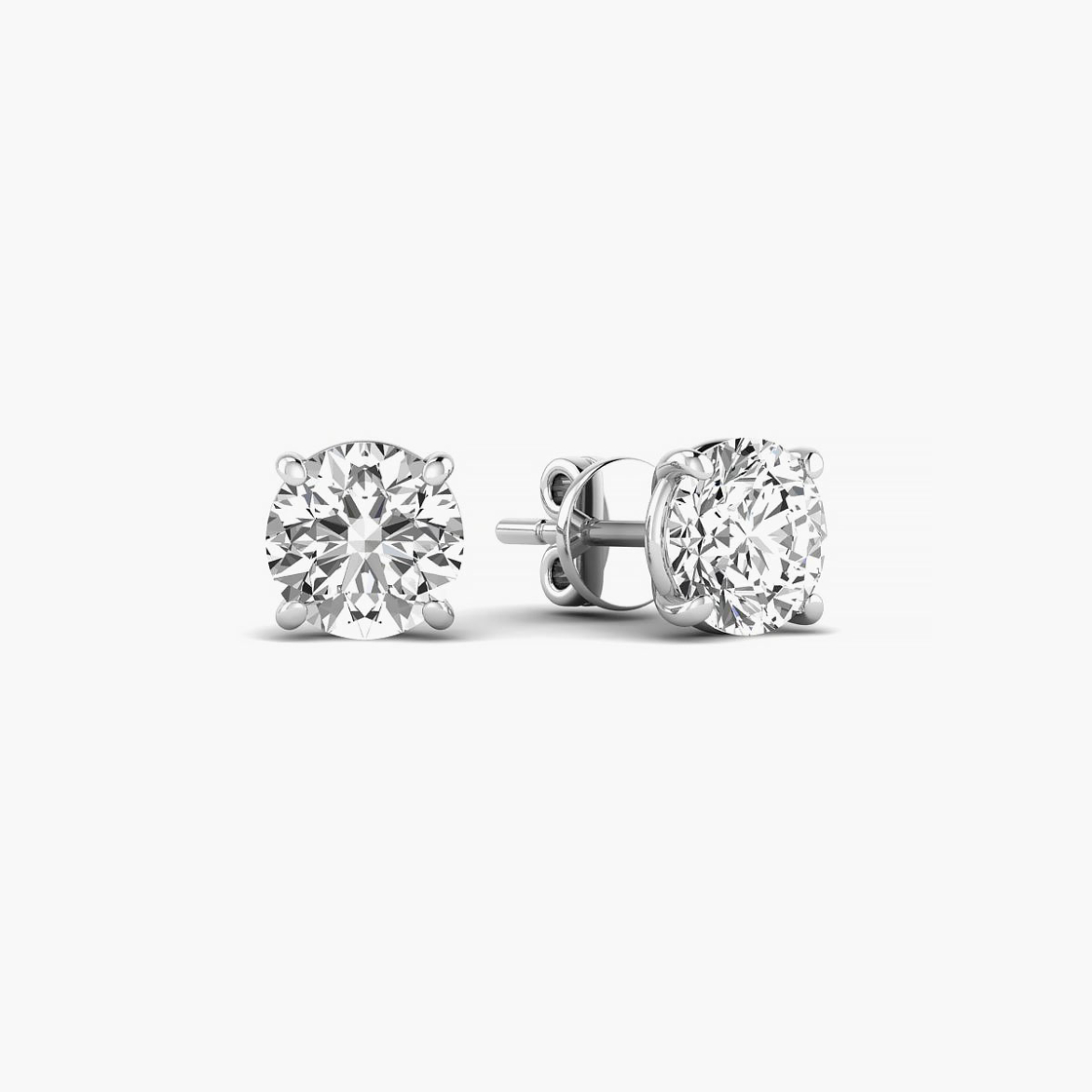
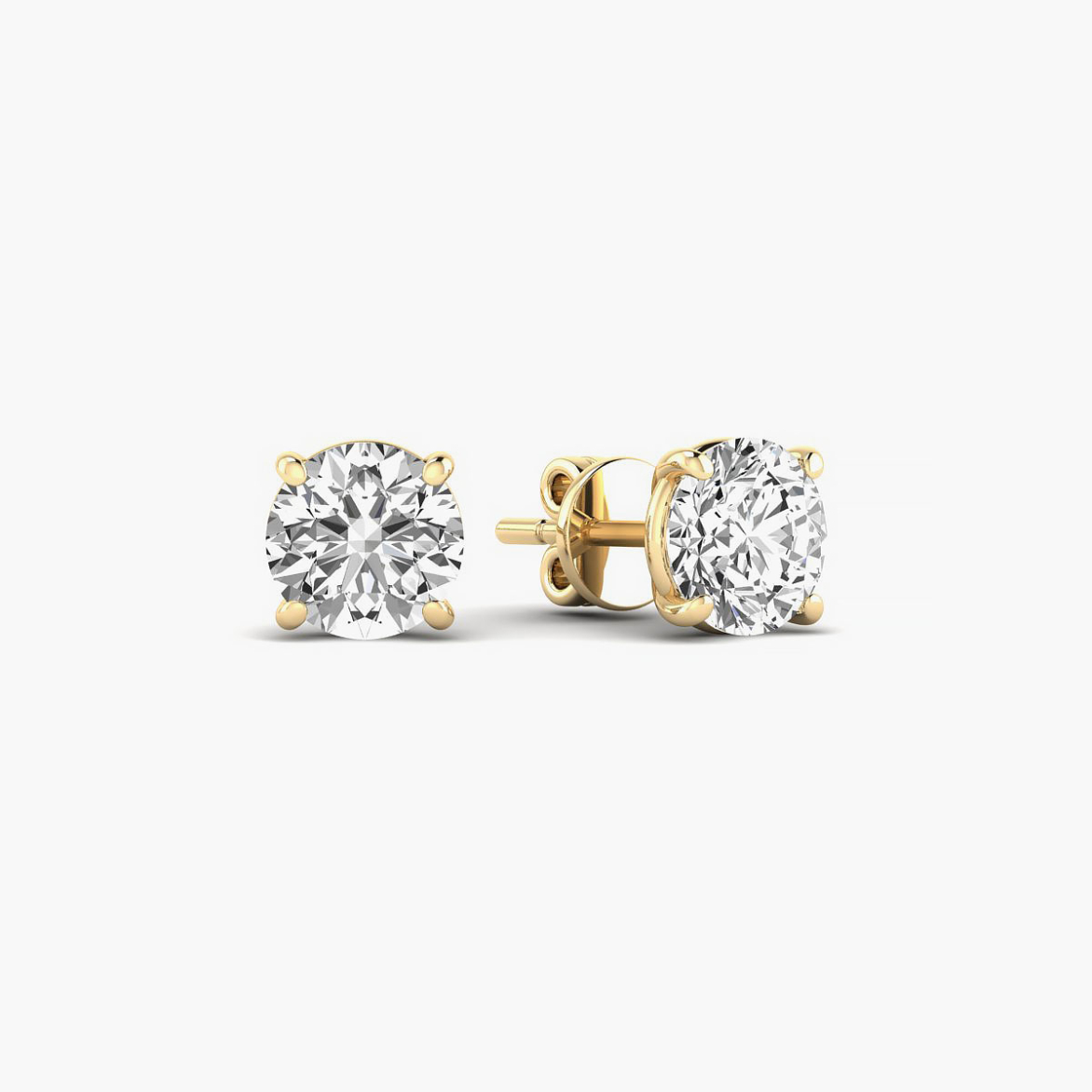
Lab Grown Diamond Stud Earring
14KT White Gold - Gift With Purchase