 Contact Us
 Appointment

Book An Appointment
Get in touch with our jewellery experts for virtual consultation
6 Things to Know About Lab-Grown Diamond Jewellery Buyback and Exchange Before You Buy


.webp)
.webp)
.webp)
.webp)


 Share on Facebook
 Share on LinkedIn
 Share on WhatsApp
A lab-grown diamond buyback or exchange policy is only as good as its fine print: before you buy, check whether the offer is exchange credit or a buyback, what the percentage is calculated on, how long the window lasts, what is excluded, and which documents you must keep.
For most Indian buyers, jewellery has always carried a second promise beyond beauty: that it holds some value. Lab-grown diamonds change that equation. They cost far less than mined stones, but the open resale market for them is still developing, and prices have fallen as production has scaled. That makes the jeweller's own written policy the real safety net. Here is what to check before you pay.
1. Exchange and Buyback Are Two Different Promises
Many buyers read "exchange and buyback" as one guarantee. They are separate promises, and they usually come with different values.
Exchange means you return a piece and get credit towards a new purchase from the same jeweller, usually of equal or higher value. It suits buyers who expect to upgrade, for example from studs to a larger pair, or from a pendant to a tennis necklace.
Buyback means the jeweller takes the piece back and pays you for it. Because money leaves the business, buyback percentages are almost always lower than exchange percentages.
Check the payout form. Some brands pay buyback by bank transfer, while others pay through your preferred payment mode or as credit. Ask which one applies.
Trading down costs you. Exchange credit usually has to go towards a piece of equal or higher value. If you pick something cheaper, the balance is rarely paid back in cash.
If you plan to keep wearing diamonds, a strong exchange policy often matters more than the buyback figure. If you want an exit option, focus on the buyback terms.

2. Ask What the Percentage Is Calculated On
An "80% buyback" can mean very different rupee amounts depending on the base it is applied to. This is the single most important question to ask.
Invoice value or current market value. Lab-grown diamond prices have been falling. A percentage of today's market price may therefore be worth much less than the same percentage of what you paid. A policy based on invoice value protects you from that decline. Our guide on lab-grown diamond resale value explains why the open market pays so little for these stones.
Whole piece or diamond only. Some policies value the gold at 100% of the day's rate but the diamond at a lower share of its current market price. Ask for the split in writing.
Gold holds, diamonds move. Gold is usually valued at the day's market rate, while the diamond follows lab-grown prices. A piece where gold makes up a larger share of the price usually holds more of its buyback value than a slim setting with a large stone. A heavier band or bangle is a good example.
What is subtracted first? Taxes and making charges are commonly excluded before the percentage is applied.
A quick example: suppose a ring is billed at ₹60,000 plus ₹1,800 GST, and ₹8,000 of that value is making charges.
Base for calculation: ₹60,000 minus ₹8,000 = ₹52,000.
80% buyback: ₹41,600. After a ₹1,000 processing fee, you receive ₹40,600.
100% exchange: ₹52,000 in credit towards a new piece.

3. Check the Time Window
"Lifetime" is a common word in jewellery marketing, but it does not always apply to both parts of a policy.
Exchange windows vary widely. Some jewellers offer lifetime exchange. Others allow full-value exchange only for a fixed period, such as 30 days from purchase.
Short windows often require unworn pieces. A 30-day full-value exchange usually expects the jewellery back in original, unworn condition with the invoice and certificate. If you are unsure about a design, decide quickly.
Buyback may have no end date. Many brands keep buyback open for as long as you hold the piece, even when exchange is time-limited.
Short buyback windows are a warning sign. A buyback that runs for only six to twelve months does little to protect a purchase you plan to keep for years.
Note the dates on your calendar the day you buy. This matters most when gifting, since the recipient may want a different design.

4. Know What Is Excluded
Exclusions are where most disappointed customers get caught. Read them before choosing the design, not after.
Custom, engraved and altered pieces: Jewellery made to your specifications is often excluded from exchange, because it cannot be resold as stock. If you are planning a custom diamond jewellery design, confirm its terms separately.
Discounted items: Pieces bought on sale may be excluded, or the discount may be deducted from their value later.
Certain stone types and cuts: Polki, pearls, and coloured stones are frequently left out. Some policies also exclude baguette, tapered, or choki diamonds from buyback.
Value caps: Buyback may apply only up to a set purchase value, so high-value pieces need a direct conversation.
Third-party purchases: Policies usually cover only jewellery bought directly from the brand, not from other stores or marketplaces.
5. Keep the Invoice and Certificate Together
Almost every buyback and exchange claim depends on two documents. Losing either one can reduce the value or void the claim entirely.
The original invoice proves where and when you bought the piece. It also shows the value, making charges, and taxes used in the calculation. Some jewellers also ask for a warranty card and government ID, and pay out only to the person named on the invoice.
The diamond certificate confirms the stone's grades, and jewellers check that it matches the stone before accepting it. Some deduct a fixed amount if the original certificate is lost. Our comparison of lab diamond certification labs in India explains what each report covers.
Store both digitally: Photograph or scan them the day you buy, and keep the originals with the jewellery box.

6. Read the Fine Print on Deductions
Even a generous percentage can shrink once deductions are applied. Look for these lines in the policy:
Discount recovery: If you received a discount on the metal or stone value, the same amount may be deducted at the time of buyback or exchange.
Reward points: Loyalty points used during purchase are often deducted from the exchange value.
Processing and shipping fees: Reverse pickup and handling usually carry a flat fee.
Quality inspection: Every returned piece is checked, and damaged or altered jewellery may be refused or valued lower.
Resizing and repairs elsewhere: Work done by another jeweller can void exchange and buyback eligibility, since the original maker can no longer vouch for the piece. Use the brand's own service for any changes.
Payout timing: Buyback payments are usually made only after the piece clears inspection, which can take a few weeks. Ask how long the process takes.
Policy changes: Most jewellers reserve the right to update their terms, so save a copy of the policy that applied on your purchase date.
A policy that answers all six points clearly, in writing, is one you can rely on. If a jeweller cannot explain the calculation in simple terms, treat that as your answer. For more checks before you pay, see these common diamond ring buying mistakes.

Buy with Confidence at Pure Jewels
Pure Jewels publishes its exchange and buy-back policy in full on its website, and every piece is certified by SGL Laboratory.
Exchange:
Lab-grown diamond jewellery can be exchanged within 30 days of purchase.
The piece must be in original, unworn condition, with the invoice and certification.
You receive 100% of the original purchase price, excluding taxes and making charges, as credit towards a piece of equal or higher value.
Buyback:
Every lab-grown diamond piece is eligible at 80% of the invoice value, excluding taxes and making charges.
This applies to purchases up to ₹4,99,999.
The amount is credited through your preferred mode of payment once the piece is verified.
Exclusions and fees:
Customised, engraved, altered and discounted pieces are not eligible for exchange.
Buyback does not apply to baguette, tapered, and choki diamonds.
Polki, pearl and coloured stones are excluded from both exchange and buyback.
A lost original certificate means a ₹1,500 deduction.
Reverse shipping carries a ₹1,000 processing fee.
You can explore our lab-grown diamond engagement rings, or create something personal through our custom design service, knowing exactly where you stand.

Frequently Asked Questions
Do lab-grown diamonds have buyback value in India?
Yes, but mainly through the original jeweller's buyback policy, since the open resale market for lab-grown diamonds usually pays far less.
What is a good buyback percentage for lab-grown diamond jewellery?
Many Indian brands quote 80%. It is strongest when calculated on the invoice value rather than the current market price of the diamond.
What is the difference between exchange and buyback?
Exchange gives you credit towards a new piece from the same jeweller. Buyback returns the value of the piece to you, usually at a lower percentage.
Are making charges and GST refunded on buyback?
Usually not. Most jewellers exclude making charges and taxes before applying the buyback or exchange percentage.
Can I exchange customised or engraved lab-grown diamond jewellery?
Most jewellers exclude customised, engraved, and altered pieces from exchange, so confirm the terms before placing a custom order.

Contact Us
3rd Floor, Building E-2, F.P.108/P, Naginawadi Road, Opp. RJD Business HUB, Katargam, Surat - 395004.India


Limited Edition Gift with Purchase
A sparkling deal only while supplies last.
Spend ₹1,00,000 or more
and select one of these complimentary gifts
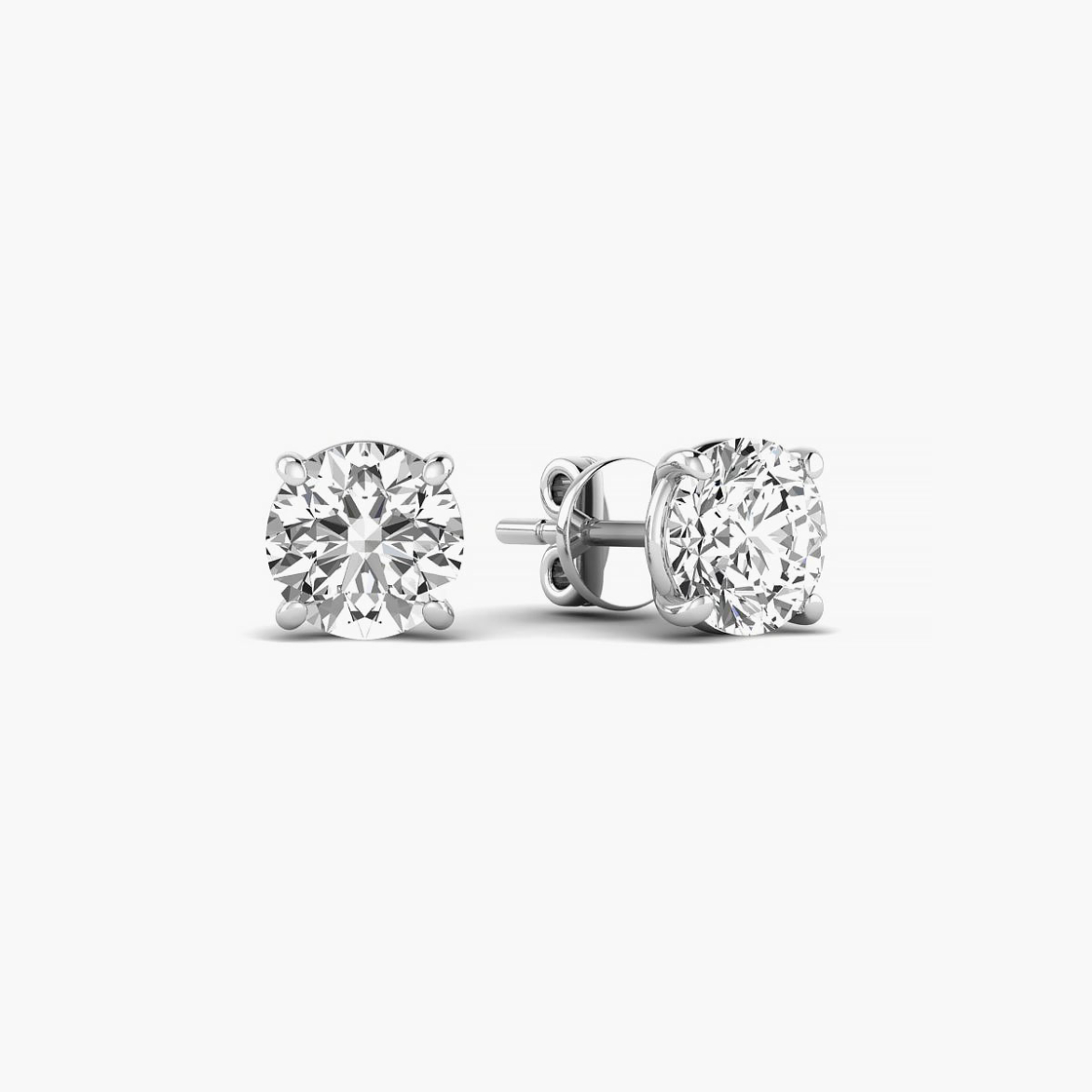
Lab Grown Diamond Stud Earring
14KT White Gold - Gift With Purchase