 Contact Us
 Appointment

Book An Appointment
Get in touch with our jewellery experts for virtual consultation
6 Factors That Decide Lab-Grown Diamond Price Per Carat in India


.webp)
.webp)
.webp)
.webp)


 Share on Facebook
 Share on LinkedIn
 Share on WhatsApp
Lab-grown diamond price per carat in India usually falls between ₹24,000 and ₹1,00,000, and six factors decide where a stone lands: carat weight, cut and shape, colour and clarity, growth method and treatment, certification, and the seller and setting. A certified 1-carat lab-grown diamond typically costs ₹30,000 to ₹85,000 as a loose stone.
That is a wide range for stones that can look identical at first glance. Lab-grown diamonds have no universal price list, so each jeweller sets its own rate. Once you know what moves the per-carat number, you can read any quote and tell whether the price matches the stone.
Key Takeaways
The per-carat rate usually rises as stones get bigger, so a 2-carat stone costs more per carat than a 1-carat stone of the same grade.
Cut is the grade most worth paying for; colour and clarity offer the easiest savings.
Stones just under 1.00 or 2.00 carats often cost noticeably less and look almost the same once set.
A certificate is the only way to confirm the grades you are paying for.
A per-carat quote covers the stone only; gold, making charges, and GST are added for finished jewellery.

Indicative Prices by Carat Weight
The ranges below are for loose, certified lab-grown diamonds in India, compiled from published retailer price guides. Treat them as a starting point for comparison, not a rate card, since cut, colour, clarity and the seller all move the final number.
The right-hand column shows the pattern most buyers miss: the rate per carat climbs with size, and it jumps between 0.90 and 1.00 carat. Lab-grown diamonds still cost far less than natural diamonds of a similar grade, which is why larger sizes are within reach.
1. Carat Weight and Size Thresholds
Carat is the starting point of every quote, because the stone price is the per-carat rate multiplied by the carat weight. What surprises most buyers is that the rate itself climbs as stones get bigger.
Larger stones carry a higher rate. Bigger lab-grown diamonds take longer to grow with fewer defects, so a 2-carat stone is quoted at a higher rate than a 1-carat stone of the same quality. The jump is far gentler than with natural diamonds.
Round-number sizes cost extra. Prices step up at popular weights such as 0.50, 1.00 and 2.00 carats. A 0.90 to 0.95 carat stone looks almost identical once set, but often costs noticeably less.
Do the maths on every quote. A 1.5-carat stone quoted at ₹50,000 per carat costs ₹75,000 for the stone alone, before gold, making charges, and tax.
Our guide on why the same carat can carry different prices explains these size steps in more detail, and you can compare real sizes across our lab-grown diamond solitaire rings.

2. Cut Quality and Shape
Cut decides how much light a diamond returns, and it is the grade most worth paying for. It also interacts with shape, which changes the rate on its own.
Cut grade. An Excellent or Ideal cut commonly adds roughly 15 to 25 percent over a lower grade. A well-cut smaller stone can outshine a poorly cut larger one, as our explainer on how diamond facets affect sparkle shows.
Round brilliants cost the most. Cutting a round stone wastes more of the rough crystal, and rounds are the most requested shape, so they usually carry the highest rate.
Elongated shapes look bigger for the money. Ovals, pears and marquise shapes spread across more surface area per carat, so they often look larger than a round of the same weight. See our pick of the best diamond ring shapes for engagement if you are deciding between them.
3. Colour and Clarity Grades
Colour and clarity move the price grade by grade, but the gaps between grades are smaller in lab-grown diamonds than in natural stones. That makes near-colourless, high-clarity stones good value.
Aim for eye-clean, not perfect. The sweet spot for most buyers is a stone that looks clean and white in the setting you choose, not the top grade on paper.
Coloured lab-grown diamonds follow different rules. Yellow, pink and blue stones are priced on how intense the colour is, not on the D to Z scale, so compare them only against stones of similar hue and saturation.
For a refresher on how these grades are assigned, read our guide to the 4Cs of lab-grown diamonds
4. Growth Method and Post-Growth Treatment
Lab-grown diamonds are made by one of two methods, CVD or HPHT, and some stones are treated after growth to improve their colour.
Method is not a quality grade. Both methods produce real diamonds, and the rate should follow the final grades, not the method.
Watch for method premiums. Some sellers price HPHT stones in the top colour grades slightly higher. If a quote costs more because of the method alone, ask what grade difference justifies it.
Treatment should be disclosed. Grading reports can record the growth method and any treatment, so ask for both when comparing two stones with similar grades.
Our comparison of CVD and HPHT lab diamonds covers how each method works.

5. Certification
A certificate turns a per-carat rate into a claim you can check. Without one, you are paying for grades you cannot verify.
Certified stones cost slightly more. Independent grading adds cost, but it confirms the carat weight, colour, clarity, and cut you are paying for.
Uncertified stones are hard to compare. A low rate on an uncertified stone may simply reflect lower grades than the seller claims.
Verify the report number. Enter it on the grading lab's official website and check that the weight, shape, and grades match the stone in front of you.
Match the laser inscription. Many certified stones carry the report number inscribed on the girdle, visible under magnification, so you can confirm the certificate belongs to that exact stone.
Our comparison of lab diamond certification in India explains what each report includes.
6. Seller, Setting and Market
The same diamond can be quoted very differently depending on who sells it and whether you see a loose-stone rate or a finished-jewellery price. This is where most confusion about per-carat pricing comes from.
Loose rate versus finished price. A per-carat rate covers the stone only. A finished ring adds gold weight at the day's rate, making charges and tax, so a ring can cost far more than its diamond's rate suggests.
Gold purity changes the total. An 18K setting contains more pure gold than 14K, so the same diamond costs more in 18K. See our guide to 14K vs 18K gold and platinum for the trade-offs.
Tax applies to the whole piece. GST on finished diamond jewellery is charged at 3% of the total value, including making charges.
Seller pricing varies. With no universal benchmark, two jewellers can quote very different rates for stones with identical certificates. Always compare quotes on the same grades, certificate, and gold weight.
Fewer middlemen, lower rates. Buying closer to the manufacturer usually means a lower rate for the same grades, because fewer margins are stacked on top.
Market supply and demand. Production capacity has grown quickly, which pushed lab-grown prices down over the past few years. The pace of those drops has slowed as the market matured, so waiting for a much lower price rarely pays off.
Quick Reference: What Raises the Price and Where to Save
Use this table to see what raises or lowers the lab-grown diamond price per carat on any quote.
How to Compare Two Quotes Fairly
Ask for the loose stone rate and the finished jewellery price as separate figures.
Match carat weight, shape, cut, colour and clarity before comparing rates.
Check both certificates online and confirm the report numbers match the stones.
Compare gold purity and gold weight, since they change the total more than most buyers expect.
Ask for making charges and GST as separate lines on the bill.

Buy a Certified Lab-Grown Diamond with Pure Jewels
Pure Jewels brings over five decades of diamond industry experience to lab-grown diamond jewellery, manufactured in Surat and set in hallmarked gold. Every piece is certified by SGL, so the grades behind your price are on paper and verifiable. You can compare sizes and shapes across our diamond solitaire rings, or discuss the exact stone you have in mind through our custom design service. Pure Jewels also offers a 100% exchange policy, with full terms on its policy page.
Frequently Asked Questions
What is the price of a 1-carat lab-grown diamond in India?
A certified 1-carat lab-grown diamond typically costs ₹30,000 to ₹85,000 as a loose stone, depending on cut, colour, clarity, and certification.
How do you calculate a lab-grown diamond's price?
Multiply the carat weight by the per-carat rate. A 1.2-carat stone at ₹50,000 per carat costs ₹60,000 for the stone, before gold, making charges, and GST.
Why do two lab-grown diamonds of the same carat have different prices?
Cut, colour, clarity, shape, and certification all change the per-carat rate. Each jeweller also sets its own pricing, because there is no universal price list.
Are lab-grown diamonds cheaper than natural diamonds?
Yes, lab-grown diamonds cost far less than natural diamonds of a similar grade, mainly because they skip mining and long supply chains. They share the same physical and chemical properties.
Is a lab-grown diamond price quote the same as the ring price?
No, a per-carat quote covers the stone only. A ring adds gold, making charges, and GST on the total value.

Contact Us
3rd Floor, Building E-2, F.P.108/P, Naginawadi Road, Opp. RJD Business HUB, Katargam, Surat - 395004.India

Limited Edition Gift with Purchase
A sparkling deal only while supplies last.
Spend ₹1,00,000 or more
and select one of these complimentary gifts
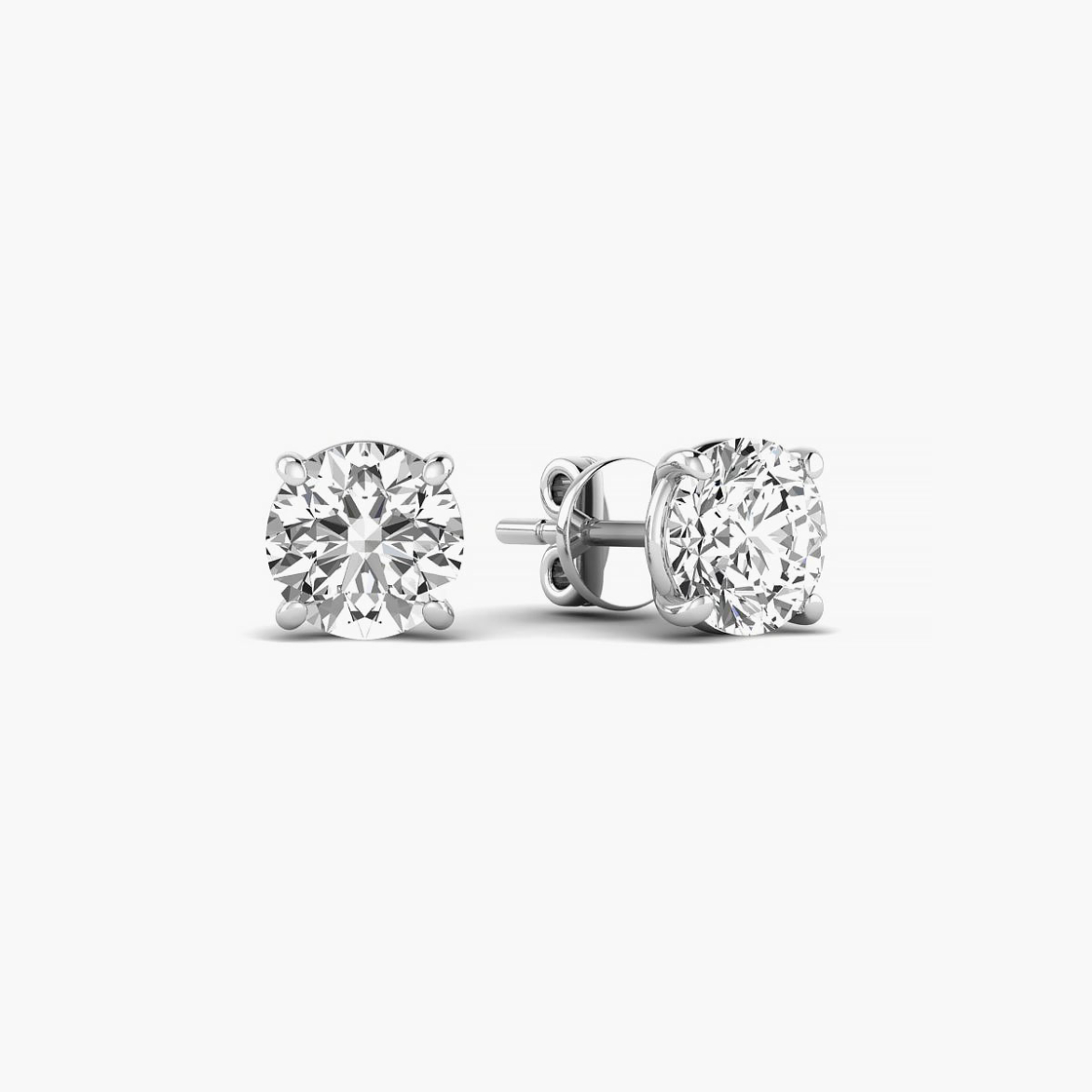
Lab Grown Diamond Stud Earring
14KT White Gold - Gift With Purchase